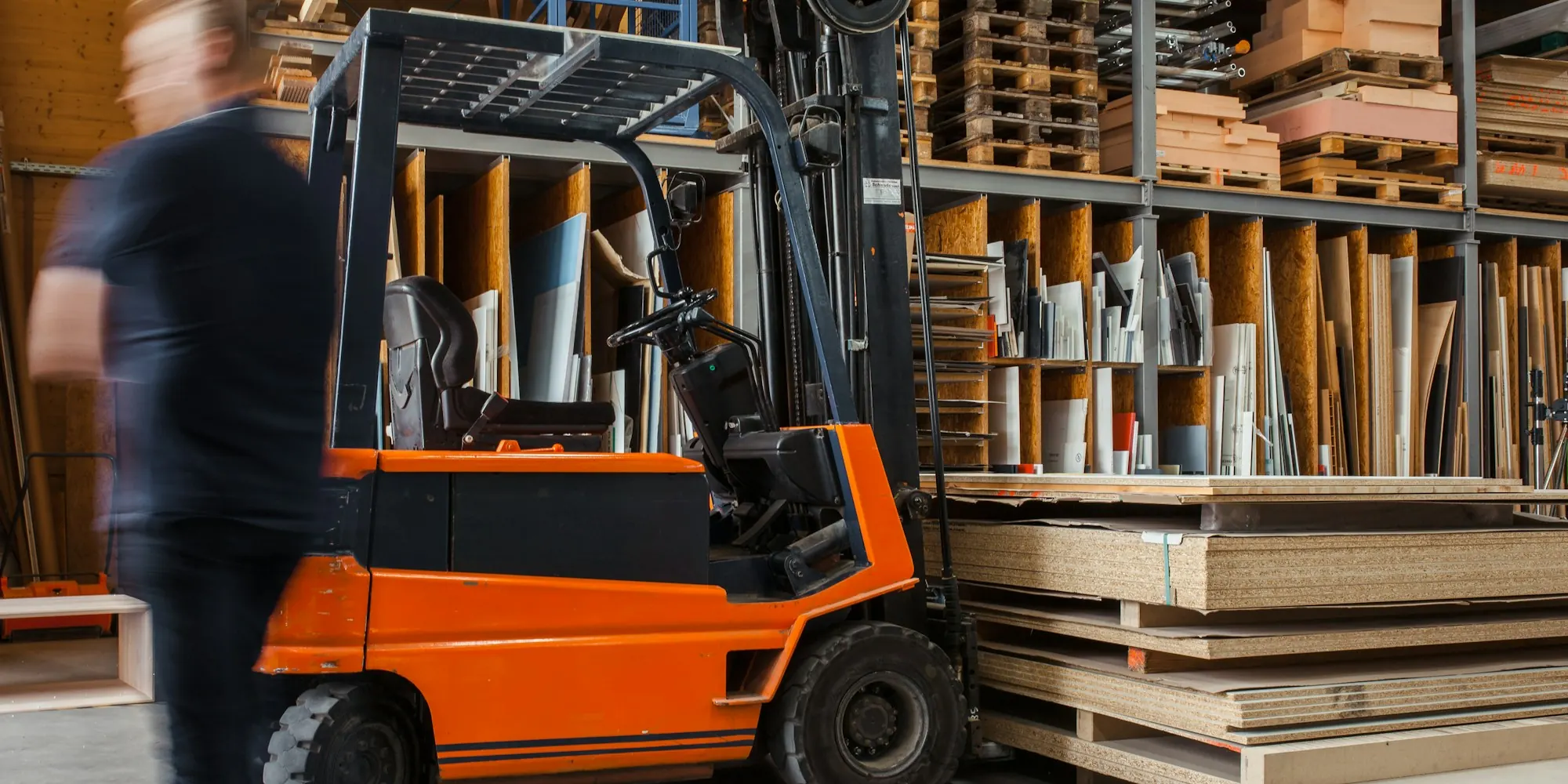
Equipment financing pays for a specific truck, oven, lift or machine, and that piece of equipment secures the deal. A funder pays the seller, you take delivery, and you repay a fixed amount over a term that roughly matches how long the equipment will stay useful, commonly two to seven years. If the payments stop, the funder's claim is on that equipment rather than on everything else the business owns, which is why equipment deals are often easier to arrange than other kinds of business credit.
Most businesses finance equipment rather than paying cash for it. The Equipment Leasing and Finance Association reports that 82% of U.S. companies use some form of financing, such as loans, leases or lines of credit, when they acquire equipment, citing the Equipment Leasing & Finance Foundation's 2024 Horizon Report. Financing a $90,000 tractor keeps that cash available for fuel, payroll and the next slow month.
How equipment financing works
The process starts with the equipment itself. You get a quote or invoice from the dealer or seller, and the funder looks at what is being bought, what it costs, how old it is and what it would sell for if it ever had to be repossessed. The offer states the amount, the term, the payment, any down payment and whether the deal is a loan or a lease. Once you sign, the funder pays the seller directly.
Because the equipment is the collateral, the funder can take it back and sell it if the payments stop, which is why NerdWallet's guide to equipment financing calls it a type of asset-based financing. The type of equipment matters for the same reason. A late-model excavator has a deep resale market, so a funder can be flexible about the rest of the file, while a custom production line that only fits one factory is harder to resell and puts more weight on the business's own cash flow.
Payments are usually fixed for the whole term, and with a standard finance agreement the equipment is yours outright once the final payment is made. Through our network, equipment deals run up to $500,000 and offers typically come back within one to two business days. Our equipment financing page lists what can be financed.
Equipment loan vs lease
With an equipment loan, you own the equipment from the start and the funder holds a claim on it until the last payment. With a lease, the leasing company owns the equipment and you pay to use it. Leases come in two common forms, and the difference decides what you pay each month and what happens when the term ends.
The $1 buyout lease
A $1 buyout lease lets you buy the equipment for a dollar when the last payment clears. Because the leasing company expects nothing back at the end, the payments cover the full price plus the financing cost, and the deal behaves much like a loan. An SBA blog guide to equipment leasing says the $1 purchase option carries higher monthly payments than a fair market value lease, along with depreciation and other tax incentives.
The fair market value lease
A fair market value (FMV) lease assumes the equipment will still be worth something when the term ends. That expected leftover value is called the residual, and because the leasing company plans to recover it by selling or re-leasing the equipment, your payments only cover the value you use up plus the financing cost. At the end you can usually buy the equipment at its market value, renew the lease or hand it back. The SBA's guide to buying and leasing assets describes this kind of operating lease as working like a traditional rental, and says the lifetime cost of buying is usually less than leasing.
| Question | Equipment loan | $1 buyout lease | FMV lease |
|---|---|---|---|
| Who owns it during the term | You, with the funder's claim on it | The leasing company | The leasing company |
| At the end of the term | It is yours outright | You buy it for $1 | You buy it at market value, renew or return it |
| Monthly payment | Depends on the down payment and term | Usually the highest | Usually the lowest |
| Best suited to | Equipment you will run for its whole life | Equipment you want to own with little money down | Equipment you expect to replace within a few years |
The deciding question is how long you plan to keep the equipment. NerdWallet, citing the Equipment Leasing and Finance Association, puts the window where leasing tends to be more cost-effective at 36 months or less. Computers and diagnostic gear that will be outdated in three years are natural candidates for an FMV lease, while a dump truck or a walk-in cooler that will run for a decade is usually cheaper to own. Choosing an FMV lease for its low payment and then buying the equipment at the end anyway can cost more in total than a loan would have.
Down payments, terms, and new vs used equipment
NerdWallet reports that many lenders offer 100% financing and some also cover soft costs like delivery and installation, while its guide to equipment loans for bad credit says equipment lenders may ask for as much as 20% down. Where an offer includes a down payment, the amount depends on the funder, the asset and the file. Putting more down lowers the payment and can make a thin file easier to accept.
Terms follow the equipment's useful life, because a funder does not want the business to owe more than the equipment is worth. NerdWallet puts typical equipment loan terms at two to seven years. The SBA's 504 loan program covers machinery and equipment with a remaining useful life of at least ten years, though like other SBA and bank loans it takes weeks and asks for tax returns and a full financial package.
Used equipment can usually be financed as readily as new, provided the seller and the asset check out, and it can bring the price down considerably. Age and condition shorten the term. One truck lender in NerdWallet's listings sets its term by the age of the truck and the life expectancy of its engine, and a private sale may mean an inspection or a title check before the money moves.
What funders look at, and typical requirements
A funder weighs the asset and the business together. On the asset side it looks at the type of equipment, its age and condition, the price against its market value and the seller. On the business side it reads your bank statements for steady deposits and existing debt payments, then looks at time in business and credit. Getting matched through us does not need a hard credit pull, since most funders prequalify from bank statements and a soft pull. A funder may run a hard pull in final underwriting, and you will know before it happens.
Every funder sets its own thresholds, and the published ones vary widely. Among the equipment lenders NerdWallet reviews, minimum credit scores run from 550 to 700, minimum time in business from six months to three years, and minimum annual revenue from none at all to $250,000. NerdWallet adds that most SBA lenders look for at least two years in business and a personal credit score of 650 or higher.
Equipment financing with bad credit
A low credit score narrows the options rather than ending them, because the equipment carries much of the funder's risk, but it does raise the price. Among the online equipment lenders it selected, NerdWallet reports APRs of roughly 22% to 35% for scores in the mid to upper 500s and in the upper teens for scores in the low 600s, against rates as low as 4% for the strongest bank and SBA borrowers. Shorter terms and a larger down payment are the other usual trade-offs. A bigger down payment, cheaper used equipment, extra collateral or a co-signer can all improve the offer, and NerdWallet warns that promises of no credit check or guaranteed approval can be signs of a predatory lender.
Section 179 and the tax side of equipment
Section 179 of the tax code lets a business deduct the cost of qualifying equipment in the year it is placed in service, rather than depreciating it over several years. According to IRS Publication 946, qualifying property includes machinery and equipment used more than 50% for business, and financed equipment counts. The publication's own example is a van bought for a courier business with payments over five years, which the owner can depreciate.
Publication 946 for 2025 returns caps the deduction at $2,500,000, reduces the cap dollar for dollar once qualifying purchases for the year pass $4,000,000, and lists $2,560,000 and $4,090,000 for tax years beginning in 2026. The deduction also cannot exceed the taxable income from your active business, though the unused part carries forward. Leases are treated differently, because the same publication says you generally cannot depreciate property you lease unless you keep the incidents of ownership. That is why an FMV lease payment is usually deducted as an operating expense while a $1 buyout lease is usually treated more like a purchase. The structure of the deal and the date the equipment goes into service both change what you can deduct, so talk to your accountant before you sign.
Equipment financing by industry
Trucking
Transportation equipment tops the Equipment Leasing and Finance Association's list of the most-financed equipment types, and used trucks have an active resale market that funders understand well. Owner-operators often finance a used tractor because it costs far less than a new one. Funders vary widely on trucking, so the file has to reach the ones that finance fleets, as our trucking funding page explains.
Restaurants
A walk-in cooler, a hood system or a fryer line can fail in the middle of a busy week and need replacing before the weekend. Because used kitchen equipment is harder for a funder to resell than a truck, a restaurant's daily card deposits often carry more weight in the decision. Our restaurant funding page covers how equipment financing sits alongside revenue-based options.
Construction
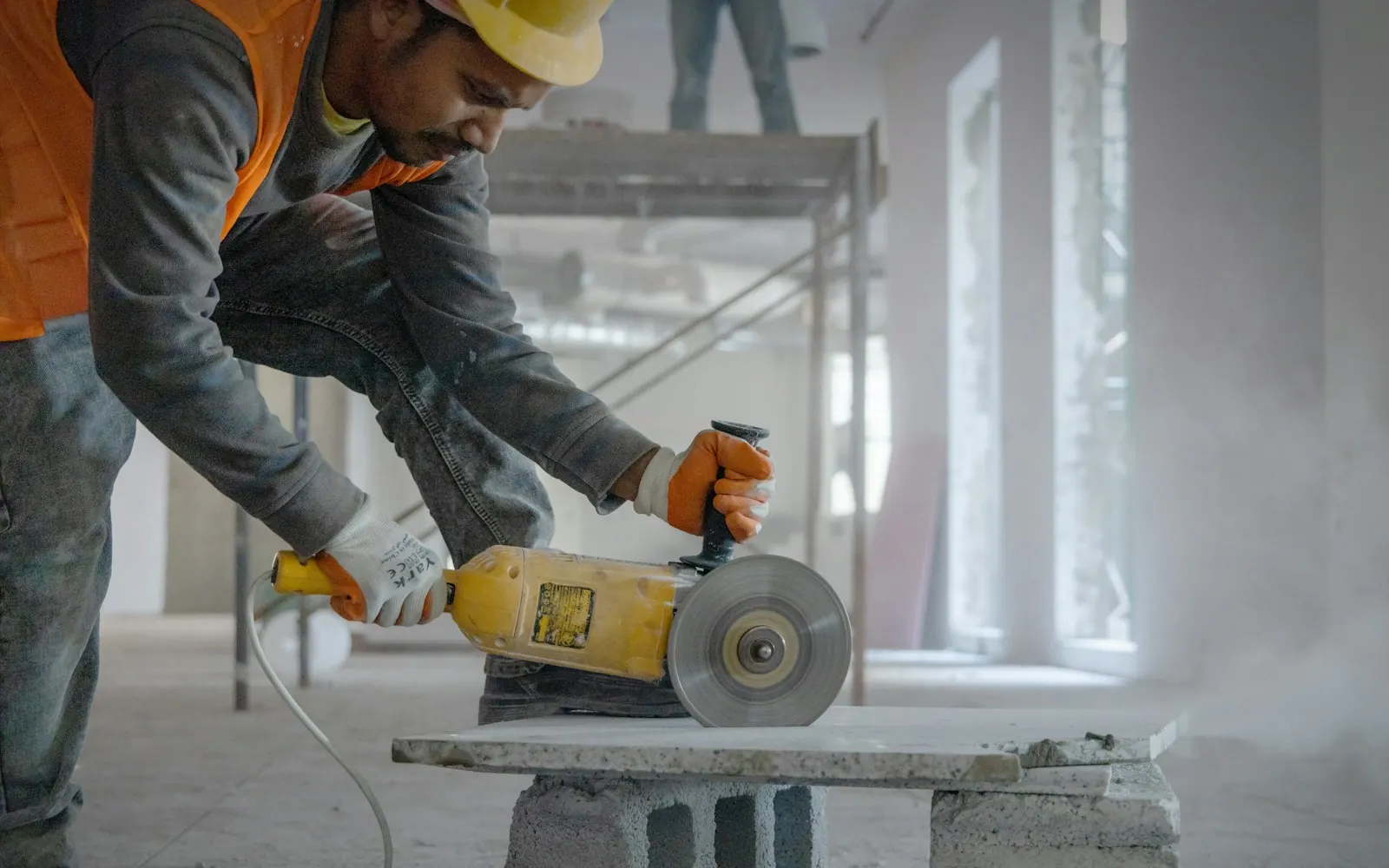
Excavators, skid steers, lifts and work trucks tend to hold their value, and construction equipment sits near the top of the association's most-financed list. Contractors who will run a machine for years often choose a loan or a $1 buyout lease. Our construction funding page covers the cash gaps between draws as well.
Medical and dental
Imaging systems, dental chairs, lasers and lab equipment each expand what a practice can bill, and stable, recurring revenue opens the door to longer terms and bank options. Computers and imaging software that age quickly often suit an FMV lease, while chairs and cabinetry are usually worth owning. Our medical and dental funding page has more on how practices are funded.
Auto services
Lifts, alignment racks, diagnostic systems and paint booths earn money only when they are working. A two-post lift can run for many years and is usually worth owning, while diagnostic scanners need replacing often enough that a lease can make sense. Our auto services funding page covers repair shops, body shops and car washes.
What an equipment deal really costs
The monthly payment is the number most owners look at first, but the total paid over the term shows the cost. Take an $80,000 machine with a 10% down payment of $8,000, leaving $72,000 financed at an example rate of 10% APR. These figures are illustrative and are not a quote.
| Illustrative example | 36-month term | 60-month term |
|---|---|---|
| Monthly payment | $2,323 | $1,530 |
| Total of payments | $83,637 | $91,787 |
| Financing cost | $11,637 | $19,787 |
| Total paid, including the down payment | $91,637 | $99,787 |
The longer term lowers the payment by about $793 a month and costs about $8,150 more in total. A business with tight monthly cash flow may need the lower payment, while one with room in its budget saves real money by paying faster. Fees add to either version, and NerdWallet puts typical origination fees at 0.5% to 4% of the loan amount, so a 2% fee here would add $1,440. Insurance and maintenance are yours from the day of delivery. Compare offers by the total of payments, the amount due up front and the end-of-term terms, and leave any tax deduction out until your accountant confirms it.
How to apply for equipment financing
- Get a written quote or invoice from the seller showing the make, model, year, condition and price, along with any delivery or installation charges.
- Start the application, which is one short form plus your last four months of business bank statements, uploaded or connected read-only from your bank.
- We send the file to the funders in our network that finance that kind of equipment, and offers typically come back within one to two business days. We go through them with you side by side, with nothing to pay and no obligation to accept one.
- When you sign the offer you choose, the funder pays the seller, you take delivery, and payments begin on the agreed schedule.
If you are weighing a loan against a lease, or new against used, call us at (818) 351-0225 with the quote in hand and someone will go through the options with you.
Questions business owners ask about equipment financing
How does equipment financing work?
A funder pays the seller for a specific piece of equipment, and you repay a fixed amount over a term tied to the equipment's useful life. The equipment secures the deal, and with a finance agreement it becomes yours outright after the final payment.
Is it better to lease or buy equipment?
It depends mostly on how long you will use it. Equipment you plan to run for many years is usually cheaper to own through a loan or a $1 buyout lease, while equipment you expect to replace within about three years can suit a fair market value lease with its lower payments.
Can I get equipment financing with bad credit?
Often, yes, because the equipment carries much of the funder's risk. A low score usually means a higher rate, a shorter term or a larger down payment, and putting more down or choosing less expensive used equipment can improve the offers you receive.
How much down payment do I need for equipment financing?
It varies by funder, asset and file. Some funders finance the full price and others ask for a share up front, which NerdWallet reports can reach 20% with some equipment lenders, and any down payment is stated in the offer.
Can I finance used equipment?
Usually, provided the seller and the equipment check out, though an older machine generally gets a shorter term than a new one.
Does applying for equipment financing hurt my credit score?
Getting matched through us does not involve a hard credit pull, since most funders prequalify from bank statements and a soft pull that does not affect your score. A funder may run a hard pull in final underwriting, and you will know before it happens.
