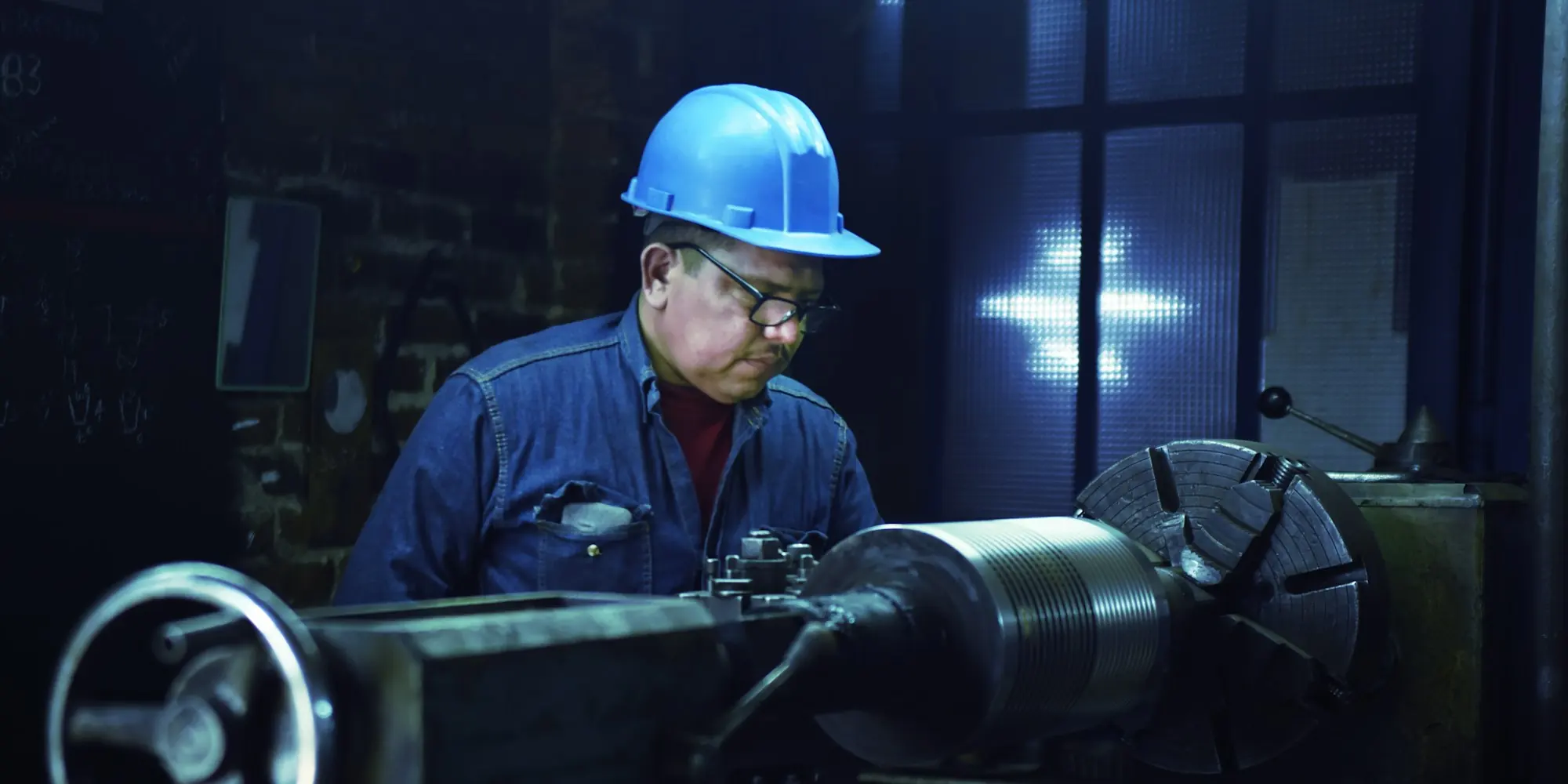
Small manufacturers usually finance machinery, materials and growth with three main tools, plus a fourth for emergencies. Equipment financing pays for a CNC machine, a press or a packaging line and uses the machine itself as security. A line of credit pays for the raw material and payroll inside a large order and is repaid when the customer pays. SBA and bank loans cover a new building, a facility upgrade or a very large machine over terms measured in years. Revenue-based financing, often called a merchant cash advance, covers a short, urgent need such as a repair that has stopped production. Purchase order financing and invoice factoring are common in manufacturing too, and although we do not arrange either, we explain below how they work.
For most shops the hard part is timing, because material and labor are paid for weeks or months before the customer pays for the finished goods. Below, we cover why that gap exists, what each kind of financing is good for, how to handle a large purchase order, and what funders look at. Our manufacturing funding page has a shorter overview.
Why manufacturers run short of cash while they grow
Most American manufacturers are small. The Census Bureau's Statistics of U.S. Businesses for 2022 counted 239,265 manufacturing firms, and about 74% of them had fewer than 20 employees. Those smaller firms took in about $1.3 million each on average, which leaves little spare cash to absorb a large order or a broken machine.
The strain comes from the cash conversion cycle, the number of days between paying for material and collecting from the customer. The Census Bureau's Quarterly Financial Report publishes balance sheets for manufacturing corporations with less than $10 million in assets. Working from its 2025 figures, those companies carried receivables equal to about 39 days of sales and inventory equal to about 50 days of operating costs, while the bills they still owed their own suppliers covered only about 20 days. That leaves roughly 69 days of costs paid out and not yet collected, close to ten weeks. For an example shop with $3 million in yearly sales, that is a little over $500,000 sitting in material, work in progress and unpaid invoices at any moment. The calculation is ours and the shop is illustrative.
That gap grows with the business, since a shop that doubles its sales usually doubles the cash tied up in inventory and receivables. The Federal Reserve's 2025 Report on Employer Firms, from its Small Business Credit Survey, found that 51% of employer firms struggled with uneven cash flow, a category that includes collecting on receivables, and 56% had trouble paying operating expenses such as payroll, rent and inventory.
The main ways to finance a manufacturing business
Equipment financing for CNC machines, presses and packaging lines
Equipment financing pays for a specific machine and uses that machine as security, so the funder can recover it if payments stop. CNC mills and lathes, press brakes, packaging lines and forklifts are typical examples, and offers usually come back within one to two business days. Because the machine backs the deal, approval tends to come more easily than for unsecured credit. In the Fed survey, 68% of applicants for auto or equipment loans were fully approved, the highest share of any product it lists. Ask whether an offer covers delivery, rigging and installation, since a machine earns nothing until it is running, and some offers cover only the invoice price. Our equipment financing page lists what it covers, and our guide to how equipment financing works goes through terms, down payments and leases.
A line of credit for materials and payroll inside an order
A line of credit gives you a limit, up to $250,000 through our network, and you draw only what you need when you need it. You repay what you drew on a weekly or monthly schedule, and the room opens up again as you repay. In a manufacturing business, a line fits the cost that comes back with every order. You draw for steel, resin or packaging when the supplier's invoice is due, draw again for the extra shifts while the job runs, and pay the line down when the customer pays. In the Fed survey, 47% of business line of credit applicants were fully approved. Our line of credit page covers limits and repayment, and our post on how a business line of credit works explains draws and costs.
SBA and bank loans for a building, a facility upgrade or a large machine
SBA and bank loans take weeks rather than days and ask for more paperwork, usually tax returns, a personal financial statement and a schedule of your existing debts. In exchange they offer the longest terms. The SBA's 7(a) program lends up to $5 million for purchasing and installing machinery, working capital, and buying or improving real estate. Its Working Capital Pilot offers lines of up to $5 million, names manufacturing among the industries it suits, and expects regular financial statements and agings of receivables and payables. The 504 program provides long-term, fixed-rate loans of up to $5 million, or $5.5 million for some projects, for buildings, land and machinery with at least 10 years of remaining useful life, which suits a new plant or a major line. Only 32% of SBA loan applicants in the Fed survey were fully approved. Our SBA and bank loans page lists what lenders ask for.
Revenue-based financing for short, urgent needs
With revenue-based financing, a funder buys a share of your future sales at a discount. It pays you a lump sum now and collects a larger fixed total by daily or weekly debit until that total has been collected. Advances arranged through us range from $5,000 to $2,000,000, typically fund in one to two business days, and usually need no collateral. They fit a manufacturer less naturally than a retailer, because a manufacturer's deposits often arrive as a few large customer payments a month while the debits keep coming in between. An advance makes sense for a short need with a clear payoff, such as a hydraulic pump that has stopped the main press, and it is an expensive way to pay for anything that takes months to earn back.
How to finance a large purchase order
A large order costs money before it pays. Take an example shop with about $250,000 in monthly sales that wins a $300,000 order from a national distributor on net-60 terms. The material costs $120,000 and the supplier wants payment within 30 days. The job adds $60,000 of overtime and temporary labor over four weeks, and the order ships around day 45, so the distributor's payment arrives around day 105. The shop carries up to $180,000 of costs for about two months before it collects anything on the order, on top of its regular work. All of these figures are illustrative.
A line of credit handles this pattern well. The shop draws for the material when the supplier is due, draws for payroll each week of the run, and repays the balance when the distributor pays, so the borrowing lasts only as long as the order needs it, and the line stays open for the next one. For a contract much larger than the shop's usual work, the SBA's Contract CAPLine, described on its page for lenders, finances the costs of one or more specific contracts, including the overhead that goes with them.
Purchase order financing and invoice factoring are two more options. We do not arrange either, but specialist companies offer both. With purchase order financing, the finance company pays your supplier directly for the goods needed to fill a confirmed order, collects from your customer, and passes you what is left after its fees, which tends to suit a distributor reselling finished goods better than a shop turning raw material into parts. With invoice factoring, you sell unpaid invoices to a factor, which advances most of their value now and sends the rest, less its fee, when your customer pays. Your customer usually pays the factor directly, so ask how the factor treats your customers before you sign.
What funders look at in a manufacturing file
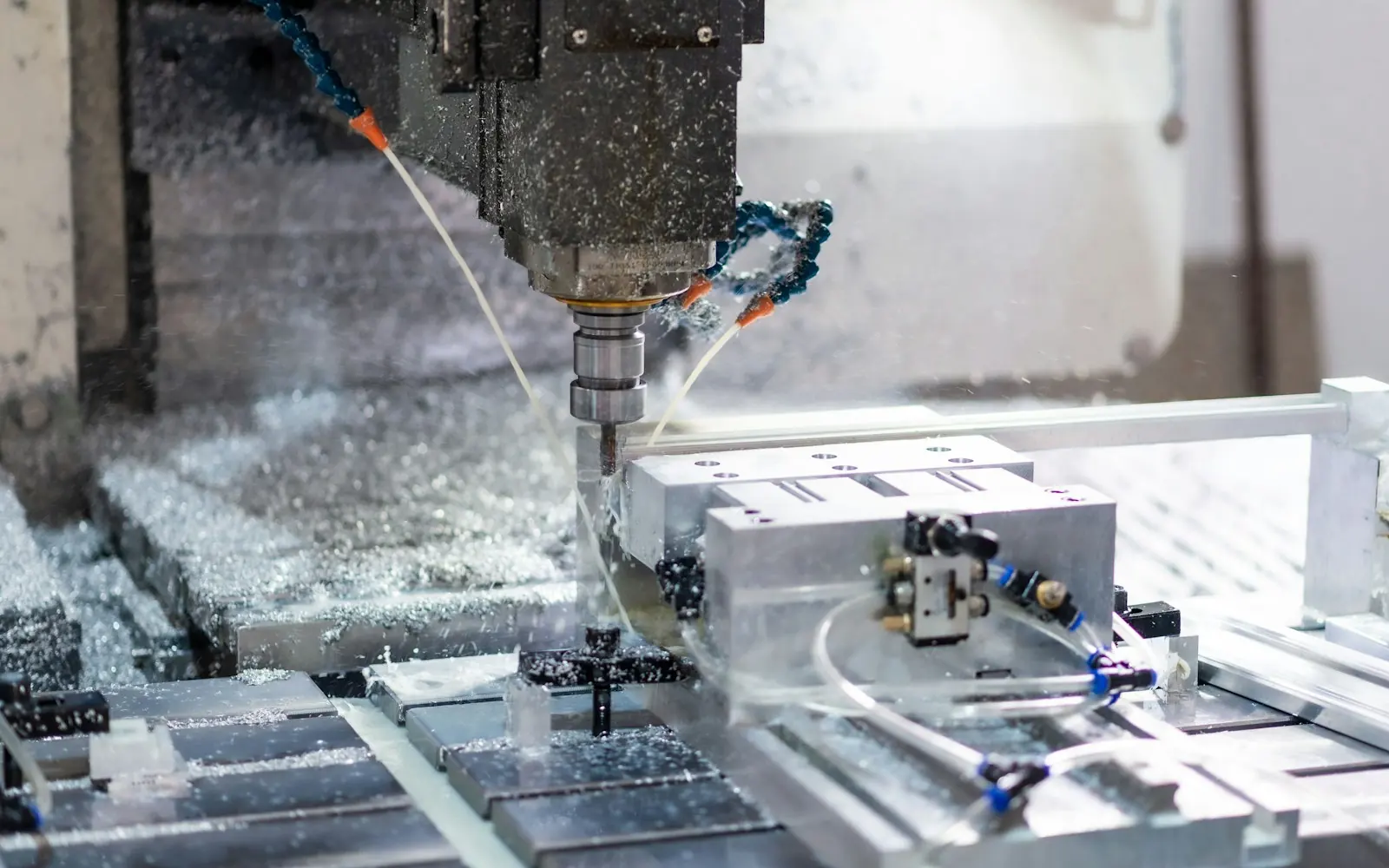
Every funder sets its own thresholds, and they vary widely, so there is no single bar a manufacturer has to clear. Revenue-based funders and many line of credit funders work from your last four months of business bank statements, looking at monthly deposits, how often the balance runs low, and what other debits already come out of the account. In our experience, funders reading a manufacturing file also look at how much revenue comes from one or two customers, the purchase orders and receivables behind the next few months, and the machines on the floor. A note explaining a lumpy month, such as a customer paying two invoices at once, saves the underwriter from guessing.
In the Fed survey, 53% of manufacturing applicants were fully approved, a little above the 49% for retail and for leisure and hospitality. Firms in business five years or less were fully approved 48% of the time, against 64% for firms open 21 years or more, and firms with $1 million to $10 million in revenue fared better than smaller ones.
Credit matters more to some funders than to others, and most prequalify from bank statements and a soft credit pull. If you are looking for manufacturing financing with bad credit, a low score narrows the list of funders rather than ending the search, and equipment financing, where the machine secures the deal, is often the first place to look. Our guide to qualifying for a merchant cash advance goes through the requirements. If you are planning a facility upgrade or a new line, the NIST Manufacturing Extension Partnership runs centers across the country that help small and medium-sized manufacturers with growth and operational improvements, which can make the plan you take to a lender easier to defend.
What manufacturers use financing for
The Fed survey found that 56% of applicants in every industry sought financing to meet operating expenses, 46% to expand or acquire business assets, and 27% to make repairs or replace capital assets. In a manufacturing business, those categories turn into a short list of familiar requests.
| Need | What tends to fit | Why |
|---|---|---|
| A new or used CNC machine, press brake or laser | Equipment financing | The machine secures the financing, and payments run over a term closer to its working life. |
| Raw material and extra shifts for a large order | A line of credit | You draw when the costs are due and repay when the customer pays, usually within a few months. |
| A packaging or labeling line | Equipment financing, or an SBA 504 loan for a large line with a long life | The line adds output for years, so a longer term keeps the payment in step with what it produces. |
| A new building, an addition or a power and ventilation upgrade | An SBA 7(a) or 504 loan, or a bank loan | Buildings pay for themselves over decades, and these programs allow the longest terms. |
| An emergency repair that has stopped production | A short revenue-based advance or a draw on an existing line | Every idle day costs output, and the repair pays for itself within weeks once the machine runs again. |
Mistakes that cost manufacturers the most
The most expensive mistake we see is paying for a long-lived machine with short money. A press or a five-axis machine may run for ten years, while an advance is usually repaid within months, so the payments come out of current sales long before the machine has paid for itself. Equipment financing or an SBA loan spreads the same cost over a term closer to the machine's working life, with a smaller payment as a result.
The second mistake is accepting an order larger than the working capital behind it. A shop that wins a contract twice its usual size can run out of cash before the first shipment, even though the order is profitable on paper. Arranging the line before you accept the purchase order gives you time to compare offers and keeps the material on schedule.
The third mistake is stacking advances, or signing the first offer without comparing it. For a shop whose customers pay in a few large checks a month, several daily debits can drain the account between those checks. Offers on the same file can differ in total payback, payment frequency and early payoff terms, and a weekly payment often suits lumpy deposits better than a slightly cheaper daily one.
How to apply for manufacturing financing
- Fill out the short application with your monthly revenue, time in business and what the money is for. There is nothing to pay to apply or to see offers, and no obligation to accept one.
- Add your last four months of business bank statements, either by uploading them or by connecting your bank read-only. Have the vendor's quote ready for equipment and the purchase order for a large job, plus tax returns, a personal financial statement and a list of current debts for an SBA or bank loan.
- We send your file to the funders in our network, bring their offers back side by side, and go through the total payback, payment and early payoff terms with you before anything is signed.
- Most applicants are funded within one to two business days of choosing an offer, and some the same day. SBA and bank loans take several weeks.
Say what the money is for when you apply, because a CNC machine and a material buy for one order call for different products and often different funders. Our funding page for manufacturers and wholesalers shows what tends to fit, and to talk it through first, call us at (818) 351-0225.
Questions manufacturers ask about financing
How do you finance a CNC machine?
Most shops use equipment financing, which uses the machine as security and usually produces offers within one to two business days. For a very large machine with at least ten years of useful life, an SBA 504 or 7(a) loan offers longer terms if you can wait the several weeks it takes.
Can a manufacturing business get a loan with bad credit?
Many can, though with fewer options. Funders build much of their decision from bank statements, and equipment financing is secured by the machine, so a low score narrows the list of funders rather than ending the search.
Does Today Capital Group offer purchase order financing or invoice factoring?
We do not arrange purchase order financing or factoring, though specialist companies offer both. For the material and labor inside an order, we arrange lines of credit through our network, and the SBA's Contract CAPLine is another route for larger contracts.
Does applying for manufacturing financing hurt my credit score?
Getting matched with funders does not need a hard credit pull, since most funders prequalify from bank statements and a soft pull. A funder may run a hard pull in final underwriting, and you will know before it does.
