
Most medical and dental practices finance four kinds of needs, and each one has a product that tends to fit it. A line of credit covers payroll, rent and supplies in the weeks between seeing a patient and being paid by the insurer. Equipment financing pays for imaging, dental chairs, lasers and lab systems, with the equipment itself as security. SBA and bank loans cover the large, slow projects, such as a buildout, a second location, buying into a partnership or acquiring a retiring owner's practice, over terms measured in years. Revenue-based financing, often called a merchant cash advance, covers short and urgent needs and is repaid from the practice's deposits. The right choice depends on how long the thing you are paying for will keep earning, and on how long your payers take to settle.
That second question sets practices apart from most small businesses, because the care is delivered first and an insurer, Medicare or Medicaid pays for most of it later. The same pattern holds in physical therapy, veterinary and outpatient clinics, though the payer mix differs. Our medical and dental practice funding page has a shorter overview.
Why a profitable practice can still run short of cash
Reimbursement runs on the payer's clock. Chapter 1 of the Medicare Claims Processing Manual says a clean claim filed electronically cannot be paid before the 14th day after the contractor receives it, and must be paid within 30 days or the contractor owes interest. A paper claim cannot be paid before the 29th day. A claim that draws a request for records or a denial is no longer clean and takes longer. Commercial insurers pay on schedules set in their contracts with the practice, and a denied claim that has to be corrected or appealed takes longer again.
How much revenue waits on that clock depends on the specialty. In the CMS National Health Expenditure data for 2024, patients paid 8.6% of U.S. spending on physician services out of pocket, while public and private health insurance paid 85.8%. Dental care splits differently, with 38.3% paid out of pocket and 59.5% by insurance. A medical practice waits on payers for nearly all of its income, and a dental practice collects more at the front desk but still waits on insurers for well over half.
When payments stop altogether, the gap shows up fast. After a cyberattack on Change Healthcare disrupted claims processing in 2024, the American Medical Association surveyed more than 1,400 respondents from physician practices. In the results it published that April, 80% reported lost revenue from unpaid claims, 55% had used personal funds to cover practice expenses, 44% could not buy supplies and 31% could not make payroll.
Growth creates the same gap on a smaller scale. Take an example dental practice that hires an associate who adds $6,000 a week in pay and supplies and produces $8,000 a week in care. Suppose 35% is collected from patients at the visit and the rest arrives from insurers about four weeks later. For the first four weeks the practice takes in $2,800 a week from the associate's patients while paying out $6,000, so it falls $12,800 behind. From the fifth week the associate brings in $8,000 a week against $6,000 in costs, and the practice is back above even in the eleventh week. If insurers take eight weeks instead of four, the shortfall doubles to $25,600. The associate is profitable on paper from the first week, and all of these figures are illustrative.
The main ways to finance a medical or dental practice
A line of credit for the reimbursement gap
A line of credit gives you a limit, up to $250,000 through our network, and you draw only what you need. You repay what you drew on a weekly or monthly schedule, and the room opens up again as you repay, without a new application. A line fits the gap in the example above, where the money is already owed to you and the only question is when it arrives. You draw to cover payroll while claims are outstanding and repay as they settle. Our guide to how a business line of credit works covers draws, limits and fees, and the line of credit page lists what it takes to apply.
Equipment financing for imaging, chairs and lasers
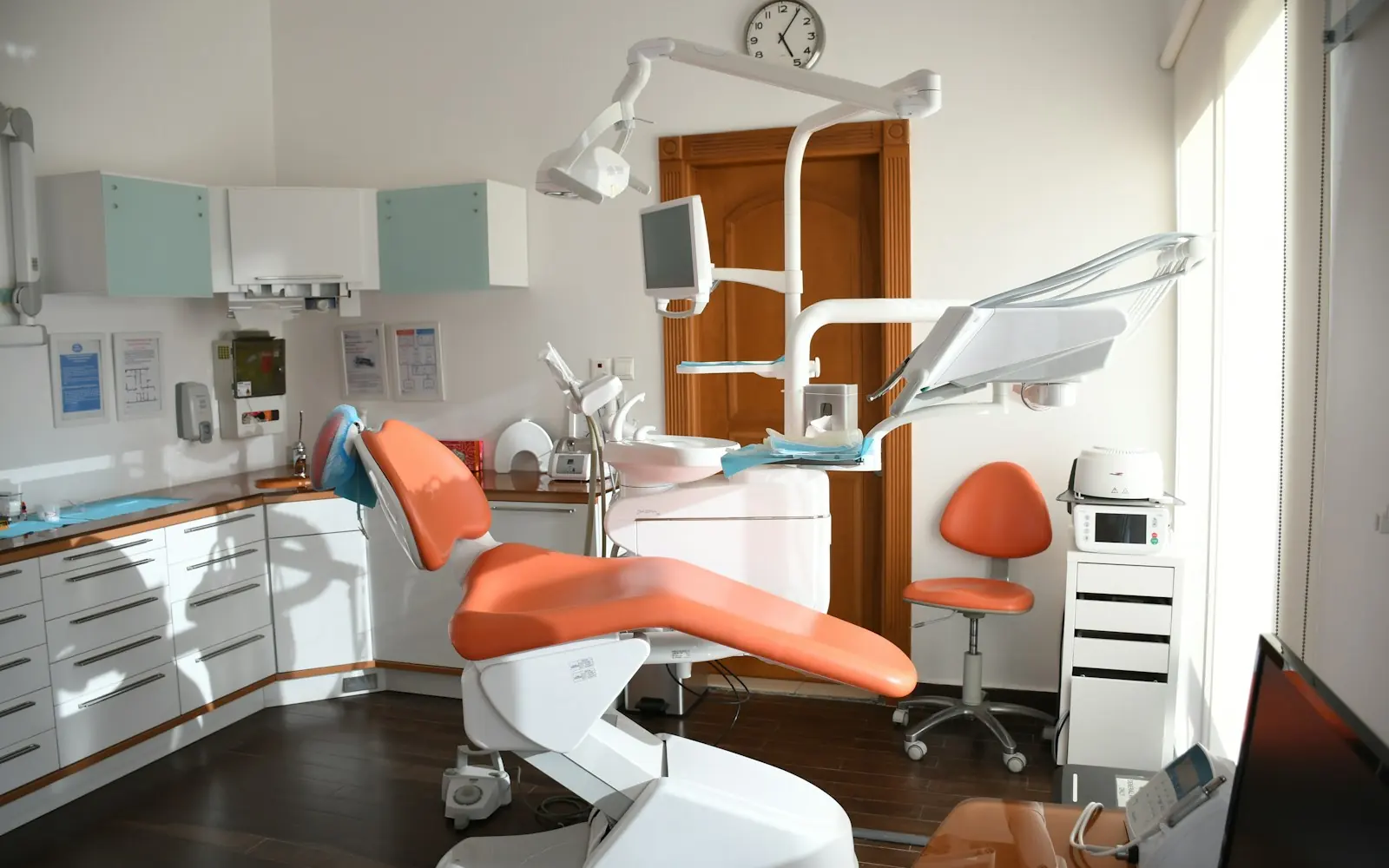
Equipment financing pays for a specific piece of equipment and uses that equipment as security. In a practice, that might be a digital X-ray or cone beam CT unit, an ultrasound machine, chairs and delivery units for a new operatory, a laser, an intraoral scanner or sterilization systems. Offers usually come back within one to two business days. Because the funder can recover the equipment if payments stop, approval tends to be easier than for unsecured credit. In the Federal Reserve's 2025 Report on Employer Firms, from its Small Business Credit Survey, 68% of applicants for auto or equipment loans were fully approved, the highest share of any product listed, compared with 47% for business lines of credit.
Match the term to the equipment's working life, so the unit is paid off while it is still in use and billing. Lease or buy, and the tax treatment of each, are questions for your accountant. Our post on how equipment financing works compares loans and leases, and the equipment financing page lists what it covers.
SBA and bank loans for buildouts and practice purchases
SBA and bank loans take weeks rather than days and ask for more paperwork, usually tax returns, a personal financial statement and a schedule of existing debts. In exchange they offer the longest terms. The SBA's 7(a) program lends up to $5 million, and its listed uses include working capital, equipment, real estate, and changes of ownership, complete or partial. That last use covers buying a retiring owner's practice or buying into an existing partnership. According to the SBA's program comparison, a 7(a) loan runs up to 10 years unless it finances real estate or long-life equipment, and up to 25 years for real estate, which suits a buildout or a second location. The 504 program is built for buildings and long-life equipment.
Ownership is a live question in medicine. The AMA's Physician Practice Benchmark Survey found that 42.2% of physicians worked in a practice wholly owned by physicians in 2024, down from 60.1% in 2012, and only 35.4% had an ownership stake in their practice. For a physician or dentist buying in, a long SBA term keeps the payment in line with what the practice earns. Only 32% of SBA loan applicants in the Fed survey were fully approved, so a complete file matters. Our SBA and bank loans page lists what lenders ask for.
Revenue-based financing for short, urgent needs
With revenue-based financing, a funder buys a share of your future revenue at a discount. It pays you a lump sum now and collects a larger fixed total by daily or weekly debit from your business account. Advances arranged through us range from $5,000 to $2,000,000, typically fund in one to two business days, and usually need no collateral. Because an advance is a purchase of future revenue rather than a loan, it is priced with a factor rate. As an example, a factor rate of 1.25 on a $30,000 advance means $37,500 paid back in total, however long it takes.
For a practice, the funder reads total deposits, which include insurer payments as well as patients' card payments. An advance fits a short need with a clear payoff, such as replacing a failed autoclave this week, and it fits a buildout poorly. Our revenue-based financing page covers amounts, timing and fit.
Some companies buy or lend against a practice's unpaid insurance claims, usually called medical receivables factoring. We do not arrange it, and it is offered elsewhere. If you consider it, ask how the company handles Medicare claims, since the same Medicare manual limits who can receive a provider's Medicare payments.
What funders look at in a practice's file
Every funder sets its own thresholds, and they vary widely. In our experience, practices are among the files funders like most, because the revenue is steady and recurring. Revenue-based funders build most of their decision from your last four months of business bank statements. They look at total monthly deposits and how steady they are, how often the balance runs low, and what other debits already come out of the account, especially daily payments to other funders. A month where a large insurer payment landed late will show, so explain it when you apply.
Time in business counts as well. In the Fed survey, 48% of applicants with five years or less in business were fully approved, compared with 64% of firms open 21 years or more, and 51% of applicants in the survey's healthcare and education category were fully approved. Credit matters more to some funders than others, and most prequalify from bank statements and a soft credit pull. If you are looking for healthcare business funding with bad credit, a low score narrows the list of funders rather than ending the search.
What practices use financing for
Hiring often lands before the revenue it produces. In an ADA Health Policy Institute poll of about 1,100 dentists, 94.5% of those recruiting called hiring dental hygienists very or extremely challenging, and about four in five owner dentists had given hygienists and assistants a raise in the previous year. A new hire is paid from the first week, while the insurer payments for that person's patients arrive weeks later.
| Need | What tends to fit | Why |
|---|---|---|
| Payroll while claims are outstanding, or a new hire's first weeks | A line of credit | The money is already owed to you, so you draw for the wait and repay when the claims settle. |
| A cone beam CT, digital X-ray or ultrasound unit | Equipment financing | The unit secures the financing, and payments run over a term close to its working life. |
| Chairs and delivery units for a new operatory | Equipment financing | Each operatory adds billable capacity, and the equipment has a clear price and useful life. |
| A buildout or leasehold improvements | An SBA 7(a) or bank loan | The space earns for many years, so a longer term keeps the payment in line with what it brings in. |
| Buying a retiring owner's practice or buying into a partnership | An SBA 7(a) loan | The program covers complete and partial changes of ownership over a long term. |
| An urgent repair, such as a failed autoclave or compressor | A short revenue-based advance or equipment financing | The cost cannot wait and pays for itself once the schedule is full again. |
Mistakes that cost practices the most
The costliest mistake we see is paying for a long-term project with short money. A buildout or a practice purchase earns for years, while an advance is usually repaid within months, so the payments come out of current revenue long before the project has paid for itself. If the work can wait the few weeks an SBA or bank loan takes, the longer term spreads the same amount over more months and the payment will be smaller.
The second mistake is covering a reimbursement gap that comes back every month with one advance after another. Each new advance taken while the last is still being repaid adds another debit to the same account, and offers for a second position are usually priced higher. If insurer payments reliably trail payroll, a line of credit that you draw and repay as claims settle is built for that pattern.
The third mistake is signing the first offer without comparing it. Offers on the same file can differ in total payback, payment frequency, term and early payoff terms, and for a practice whose deposits arrive in uneven insurer batches, a weekly payment can leave more room than a slightly cheaper daily one.
How to apply for medical or dental practice financing
- Fill out the short application with your monthly revenue, time in business and what the money is for. There is nothing to pay to apply or to see offers, and no obligation to accept one.
- Add your last four months of business bank statements, either by uploading them or by connecting your bank read-only. For an SBA or bank loan, have tax returns, a personal financial statement and a list of current debts ready too.
- We send your file to the funders in our network, bring their offers back side by side, and go through the total payback, payment and early payoff terms with you before anything is signed.
- Most applicants are funded within one to two business days of choosing an offer, and some the same day. SBA and bank loans take several weeks.
Say what the money is for when you apply, because a payroll gap, a new imaging unit and a practice purchase call for different products and different funders. More on how we work with practices is on our medical practice funding page, and to talk it through first, call us at (818) 351-0225.
Questions practice owners ask about financing
How do medical practices cover the gap while waiting for insurance reimbursement?
Many use a line of credit, drawing to cover payroll, rent and supplies while claims are outstanding and repaying as insurers settle, and the room on the line opens again as it is repaid.
How do you finance medical or dental equipment?
Most practices use equipment financing, which uses the imaging unit, chair or laser as security and usually produces offers within one to two business days. For large, long-life purchases that can wait a few weeks, an SBA 7(a) or 504 loan offers longer terms and smaller payments.
Can I use an SBA loan to buy a medical or dental practice?
The SBA's 7(a) program lists complete and partial changes of ownership among its uses, which covers buying a practice or buying into a partnership, with loans of up to $5 million. Expect the process to take weeks and to need tax returns, a personal financial statement and a debt schedule.
Can a medical practice get funding with bad credit?
Many can, though with fewer options. Revenue-based funders build most of their decision from bank statements, so a low score narrows the list of funders rather than ending the search.
Is a merchant cash advance a good idea for a medical practice?
It can be for a short, specific need with a clear payoff, such as an urgent repair, because the money arrives quickly. It fits a buildout, a purchase or a gap that comes back every month poorly, so compare it with a line of credit or a longer-term loan before you sign.
Does applying for practice financing hurt my credit score?
Getting matched with funders does not need a hard credit pull, since most funders prequalify from bank statements and a soft pull. A funder may run a hard pull in final underwriting, and you will know before it does.
