
Hair salons, barbershops, nail salons and med spas usually pay for growth with four kinds of financing, each suited to a different job. Equipment financing covers chairs, stations, pedicure spas and med spa lasers, with the equipment as security. A line of credit covers product orders and the weeks of pay while a new stylist builds a book. Revenue-based financing, often called a merchant cash advance, covers short needs and is repaid as a share of daily card sales. SBA and bank loans cover build-outs and second locations over terms measured in years. Which one fits depends on how long the purchase will keep earning, and on whether your chairs run on commission or booth rent, because the two models put very different deposits in your bank account.
A salon with a full book can still be short of cash, because the treatment room or the new location has to be paid for months before the first client sits down. Our salon and spa funding page has a shorter overview.
How money moves through a salon
Clients pay by the appointment, and most of them pay by card. The Federal Reserve's 2025 Diary of Consumer Payment Choice found that credit cards made up 35% of all consumer payments in 2024 and debit cards another 30%, while cash had fallen to 14%. A salon taking payments through its own terminal sees card settlements land on nearly every day it is open, and that record is what a revenue-based funder reads.
Most of the industry is small. The Census Bureau's County Business Patterns for 2023 counted 126,382 hair, nail and skin care establishments with paid employees (84,176 beauty salons, 34,417 nail salons and 7,789 barber shops), and about 68% of them had fewer than five employees. The Census Nonemployer Statistics for 2023 counted another 1,276,010 hair, nail and skin care businesses with no employees at all, with combined receipts of about $42.2 billion, or roughly $33,000 each. That count takes in any business with receipts of $1,000 or more, so it includes part-time operators, and it also takes in stylists and barbers who rent a chair or a suite and file as businesses of their own. For every salon that employs its staff, there are about ten one-person beauty businesses.
Booth rental, commission and what your deposits look like
How you pay the people behind the chairs decides what shows up in your bank account, and funders build most of their offer from that account. In a commission salon, the stylists are on your payroll, every service runs through your terminal, and you pay each stylist a share of what they brought in. In a booth rental salon, each stylist runs a separate business and pays you rent. The IRS, in Publication 4902, describes a booth renter as someone who leases space from an existing business and operates as an independent contractor, with signs such as a key to the building, their own hours, their own products and their own prices.
Take an example salon with eight chairs. On commission, if each stylist brings in about $1,650 a week, the salon deposits around $13,200 a week, or about $57,200 a month, spread across every day it is open, and at a 45% commission about $25,700 of that goes back out as payroll. If the same eight chairs are rented at $300 a week each, the salon collects about $10,400 a month in four or five lumps as rent comes in, and the stylists' service revenue lands in their own accounts. All of these figures are illustrative.
A funder reading those two files sees two different businesses. The commission salon shows much larger deposits that follow the appointment book, along with the payroll and product costs that come with them, so an offer can be larger but the funder will look closely at what is left after commission. The booth rental salon shows smaller, very regular deposits and fewer costs, because renters buy their own products, so the offer tends to be smaller and is sized against the rent roll. A salon that mixes the two shows both patterns at once.
If you have switched models in the last few months, your deposits will have dropped or jumped for reasons unrelated to how busy you are, so say so when you apply. And if you rent a chair or a suite and are applying for your own business, keep your service revenue in a separate business account, because a funder can only count deposits it can identify as business income.
The main ways to finance a salon
Equipment financing
Equipment financing pays for a specific piece of equipment and uses it as security. In a salon that means styling chairs, stations, shampoo units, dryers, pedicure spas and manicure tables. In a med spa it means lasers and skin treatment devices, the expensive end of the range. Offers usually come back within one to two business days, and payments run over a term closer to the equipment's working life.
Because the funder can recover the equipment if payments stop, approval tends to be easier than for unsecured credit. In the Fed's Small Business Credit Survey, published as the 2025 report on employer firms, 68% of applicants for auto or equipment loans were fully approved, the highest share of any product listed, compared with 47% for business lines of credit and 33% for merchant cash advances (where another 58% were partially approved). Our equipment financing page lists what it covers, and our guide to how equipment financing works goes through terms and down payments.
Line of credit
A line of credit gives you a limit, up to $250,000 through our network, and you draw only what you need. You repay what you drew on a weekly or monthly schedule, and as you repay, the room opens up again without a new application. In a salon, a line suits costs that come back every year. Retail product and back-bar color are bought ahead of the clients who use them, a holiday order can run well above a normal month's, and a new stylist on payroll draws pay for weeks before their book covers it. Our line of credit page explains limits, draws and repayment.
Revenue-based financing, or a merchant cash advance
With revenue-based financing, a funder buys a share of your future sales at a discount. It pays you a lump sum now and collects a larger fixed total by daily or weekly debit from your business account until that total is reached. Advances arranged through us range from $5,000 to $2,000,000, typically fund in one to two business days, and usually need no collateral. Because an advance is a purchase of future sales rather than a loan, it is priced with a factor rate. As an example, a factor rate of 1.30 on a $30,000 advance means $39,000 paid back in total, however long it takes.
An advance fits a short need with a clear payoff, such as a lease deposit on a space that will not wait, or rent through the quieter weeks that, in our experience, many salons see after the holidays. It suits commission salons more naturally than booth rental salons, because a share of daily card sales works best when the card sales run through your account. Our revenue-based financing page covers amounts, timing and fit.
SBA and bank loans
SBA and bank loans take weeks rather than days and ask for tax returns, a personal financial statement and a schedule of your existing debts. The SBA's 7(a) program lends up to $5 million and can be used for working capital, equipment, furniture, fixtures and supplies, and buying or improving real estate, which covers most of a salon build-out. The 504 program provides long-term, fixed-rate financing of up to $5 million, or $5.5 million for some projects, for major fixed assets such as a building, and it cannot be used for working capital or inventory. Only 32% of SBA loan applicants in the Fed survey were fully approved. Our SBA and bank loans page lists what lenders ask for.
Opening a second location
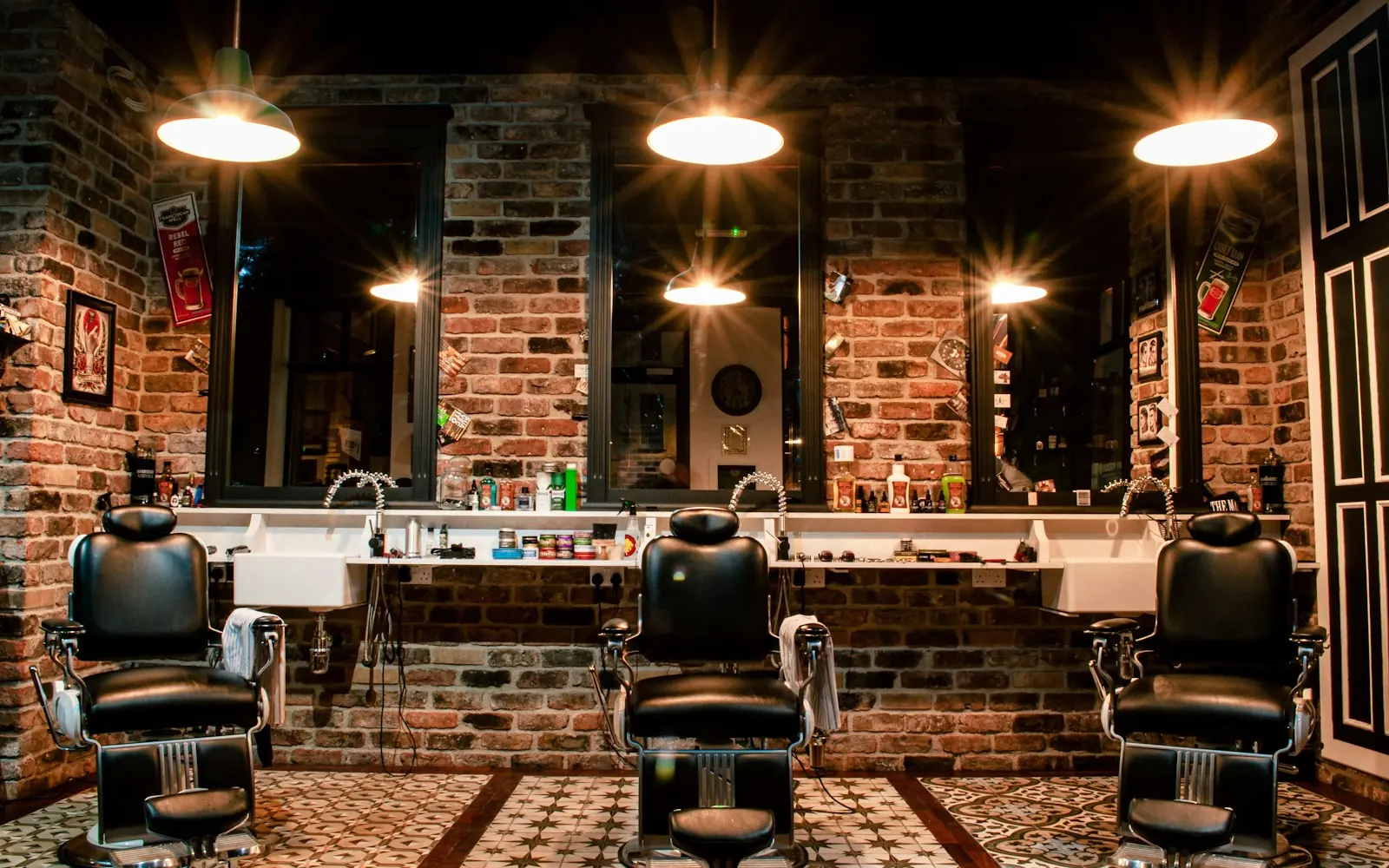
With a second location, the lease deposit, the build-out, the plumbing for shampoo bowls or pedicure spas, the stations and the first product order all come due before the first booking, and the new room may take months to fill. If that build-out is paid for with a short advance, every payment comes out of the first location's sales while the second one is still quiet.
The cost is easier to carry when each part is paid for with the product that suits it. The build-out suits an SBA 7(a) or bank loan if the lease date allows a few weeks for underwriting. The chairs, stations and devices suit equipment financing over their working life. A line of credit covers payroll for new staff and the opening product order, and is paid down as the new book fills. Renting some chairs can shorten that ramp, though the new location's deposits will then show rent rather than services.
What funders look at in a salon file
Every funder sets its own thresholds, and they vary widely. Revenue-based funders build most of their decision from your last four months of business bank statements, looking at total deposits and how steady they are, how often the balance runs low, what debits already come out, especially daily payments to other funders, and how long you have been open. In the Fed survey, 48% of applicants with five years or less in business were fully approved, against 64% of firms open 21 years or more.
Credit matters more to some funders than to others, and most prequalify from bank statements and a soft credit pull. If you are looking for nail salon or barbershop financing with bad credit, a low score narrows the list of funders rather than ending the search, and steady card deposits carry real weight. Our guide to qualifying for a merchant cash advance goes through the requirements.
What salons use financing for
The Fed survey found that 56% of applicants across all industries sought financing to meet operating expenses, 46% to expand or buy business assets, and 27% to make repairs or replace capital assets. In a salon, those turn into familiar requests.
| Need | What tends to fit | Why |
|---|---|---|
| Styling chairs, stations or pedicure spas | Equipment financing | The equipment secures the financing, and payments run over a term closer to its working life. |
| A laser or body contouring device for a med spa | Equipment financing | The device is expensive and specific, and it pays for itself treatment by treatment over years. |
| A renovation or a second location | An SBA 7(a) loan, with equipment financing and a line of credit alongside | The work earns for years, and a short repayment would come out of current sales while it fills. |
| Retail and back-bar stock before the holidays | A line of credit | The stock sells through within weeks, and the line opens up again as it is repaid. |
| Hiring stylists on payroll | A line of credit | You draw for the weeks their books are filling and repay as their services come in. |
Mistakes that cost salon owners the most
The costliest mistake we see is stacking, which means taking a second or third advance while the first is still being repaid. Each new advance adds another debit to the same account, and offers for a second position are usually priced higher. If you already carry more than one, consolidation replaces them with a single weekly or monthly payment on a longer term, with the new funder paying the old ones directly, though the total cost may not go down.
The second mistake is paying for a build-out or a second location with a short advance, so the payments come out of current sales long before the project has paid for itself. The third is signing the first offer without comparing it. Offers on the same file can differ in total payback, payment frequency and early payoff terms, and a booth rental salon should check that the payment days line up with the days rent comes in.
How to apply for salon financing
- Fill out the short application with your monthly revenue, time in business and what the money is for. There is nothing to pay to apply or to see offers, and no obligation to accept one.
- Add your last four months of business bank statements, either by uploading them or by connecting your bank read-only. For an SBA or bank loan, have tax returns, a personal financial statement and a list of current debts ready too.
- We send your file to the funders in our network, bring their offers back side by side, and go through the total payback, payment and early payoff terms with you before anything is signed.
- Most applicants are funded within one to two business days of choosing an offer, and some the same day. SBA and bank loans take several weeks.
Tell us whether your chairs run on commission, booth rent or a mix, and what the money is for, because new pedicure spas and a second location call for different products and different funders. Our salon funding page shows what tends to fit, and you can call us at (818) 351-0225 to talk it through first.
Questions salon owners ask about financing
Can a nail salon get financing with bad credit?
Many can, though with fewer options. Revenue-based funders build most of their decision from bank statements and card deposits, and equipment financing is secured by the equipment, so a low score narrows the list of funders rather than ending the search.
How do you finance salon equipment?
Most salons use equipment financing, which uses the chairs, stations, pedicure spas or med spa devices as security and usually produces offers within one to two business days. For equipment that is part of a larger build-out and can wait a few weeks, an SBA 7(a) loan offers a longer term and a smaller payment.
Can a booth rental salon get a business loan?
Yes, though funders size the offer against the rent you collect, since your stylists' service revenue goes to their own accounts. Steady weekly rent deposits read well, and a salon that mixes commission and booth rental will show both patterns on its statements.
Is a merchant cash advance a good idea for a salon?
It can be for a short, specific need with a clear payoff, because repayment follows daily card sales and the money arrives quickly. It fits a build-out or second location poorly, so check the total payback, payment frequency and early payoff terms before you sign.
Does applying for salon financing hurt my credit score?
Getting matched with funders does not need a hard credit pull, since most funders prequalify from bank statements and a soft pull. A funder may run a hard pull in final underwriting, and you will know before it does.
