
Most business vehicle loans are a form of equipment financing, where the van, pickup or truck you are buying secures the deal. The funder pays the dealer or seller, its lien is recorded on the title, and the business repays a fixed monthly amount over a term that commonly runs two to seven years. Through the funders we work with, offers on vehicle and equipment deals typically come back within one to two business days once you have a quote for the vehicle.
This guide covers cargo vans, pickups, box trucks, service trucks and small fleets. Our equipment financing page lists everything else that can be financed, and our guide to how equipment financing works goes deeper on leases, down payments and the general Section 179 limits. If you run semis or tractor trailers, our trucking financing guide covers authority, factoring and the costs between loads.
How business vehicle loans work
The deal starts with the vehicle. You get a buyer's order or invoice from the dealer, or a bill of sale from a private seller, showing the price, the VIN, the mileage and any upfit such as shelving, a ladder rack, a liftgate or a utility body. The funder weighs the price against what the vehicle would resell for and checks that the payment fits the business's deposits. Once you sign, the funder pays the seller, you take the keys, and the funder stays on the title as lienholder until the last payment clears.
Business vehicle finance and business auto financing differ from a personal car loan in a few practical ways. NerdWallet's guide to business auto loans notes that the lender will likely ask how the vehicle will be used and may want business financial statements, that the vehicle can be titled in the business's name, and that work-related modifications such as adding a crane or towing equipment can be financed along with it. If the upfit is on the invoice, it can usually sit in the same financing rather than coming out of your cash.
Loan or lease for a work vehicle
With a loan, the business owns the vehicle and the funder holds a lien until payoff. With a lease, the leasing company owns it and you pay to use it, with a buyout or a return at the end. A lease usually has the lower payment, and a loan usually costs less in total if you keep the vehicle for its working life. For work vehicles, mileage tends to settle it. A service van that covers 30,000 miles a year with a drilled floor and shelving is usually cheaper to own than to return under a lease's mileage and condition terms, while a pickup a manager drives for three years is a better lease candidate. Our equipment financing guide compares the $1 buyout lease, the fair market value lease and a loan side by side.
New or used business vehicles
A new vehicle gets the longest terms and the fewest questions, because its value and condition are known. A used one costs less, but funders limit its age and mileage so the business never owes more than the vehicle is worth. NerdWallet reports that many business auto lenders set mileage limits and will not approve a used vehicle more than five years old. Among the lenders it lists, one bank program caps used vehicles at 12 model years and 120,000 miles, and another lender caps company cars and SUVs at three years old and 125,000 miles.
A private sale adds a title step, since the funder will want a clean title in the seller's name or a payoff letter from the seller's lender. You can run the VIN through the Justice Department's National Motor Vehicle Title Information System, whose reports show the current title state, brand history such as "salvage" or "flood", the last odometer reading, and any total loss or salvage history. A branded title or an odometer reading that does not match the paperwork can stop an equipment deal, so check before you agree on a price.

What lenders check for a commercial vehicle loan
Commercial vehicle financing is judged on the vehicle and the business together.
- Time in business matters because a longer record of deposits shows the payment will be covered. Several bank programs NerdWallet lists ask for at least 24 months, while some equipment funders take newer businesses with more money down.
- Credit is read on the owner as well as the business, and published minimums vary widely, from 550 at one equipment lender to 700 at another in NerdWallet's list. A lower score narrows the options and raises the cost rather than ending the conversation.
- A down payment is not always required, since some programs finance the full price and one bank program in NerdWallet's list goes up to 110% to cover soft costs such as delivery and taxes, but a funder may ask for money down on an older vehicle, a thin file or a weaker score.
- The vehicle's age, mileage and condition set the term, and a specialty body or a heavily modified truck may need an appraisal.
- The title has to be clean, and the funder is listed as lienholder and usually as loss payee on the insurance.
The funders we work with generally look for about a year in business and about $20,000 a month in deposits. If you're not there yet, apply anyway. Some funders work with newer or smaller businesses, and we'll tell you what's realistic. Getting matched through us does not need a hard credit pull, because most funders prequalify from bank statements and a soft pull. A funder may run a hard pull in final underwriting, and you will know before it happens.
Expect to sign a personal guarantee. In the Federal Reserve Banks' 2026 Report on Employer Firms, 59% of small employer firms with debt had used a personal guarantee to secure it and 51% had used business assets. Vehicle loans with no guarantee exist for established businesses with their own credit history, but they are the exception.
Section 179 and the vehicle weight rules
Section 179 lets a business deduct the cost of qualifying property, financed or not, in the year it is placed in service instead of depreciating it over several years. For vehicles, the weight rating decides which limits apply. The figures below come from IRS Publication 946, the IRS guide to depreciation. Tax rules change and depend on your whole return, so confirm how this applies to you with a tax professional before you buy.
For trucks and vans, Publication 946 uses the gross vehicle weight rating, the maximum loaded weight the manufacturer rates the vehicle for, and for cars it uses the unloaded gross vehicle weight. A vehicle also has to be used more than 50% for business in the year it is placed in service to qualify for Section 179 or the special depreciation allowance, so a pickup that doubles as the family car on weekends needs a mileage log that shows the split.
| Vehicle | How Publication 946 treats it |
|---|---|
| Cars rated 6,000 pounds or less unloaded, and trucks or vans with a gross vehicle weight rating of 6,000 pounds or less | A passenger automobile. Total first-year depreciation, Section 179 included, is capped at $20,200 for one placed in service in 2025, or $12,200 if no special depreciation allowance is claimed. |
| SUVs and other passenger vehicles rated over 6,000 and up to 14,000 pounds | Not a passenger automobile, but the Section 179 deduction is capped at $31,300 for tax years beginning in 2025 and $32,000 for tax years beginning in 2026. |
| Pickups with a cargo bed at least 6 feet long that cannot be reached from the cab, vehicles seating more than nine behind the driver, and van-style vehicles with no seating behind the driver that meet the publication's body test | The heavy SUV cap does not apply, so the general Section 179 limit applies. |
| Qualified nonpersonal use vehicles, such as dump, flatbed, bucket and refrigerated trucks, cargo vehicles over 14,000 pounds loaded, delivery trucks with seating only for the driver, and vans with permanent shelving and painted company advertising | Not passenger automobiles, and excepted from the listed property rules that apply to most other vehicles. |
Publication 946 also says businesses must take a 100% special depreciation allowance on qualified property, new or used, acquired and placed in service after January 19, 2025, unless they elect out. A van counts as a qualified nonpersonal use vehicle when it has been modified so it is unlikely to see more than minimal personal use, and the IRS gives permanent shelving and painted advertising or the company name as examples, so a plain cargo van does not get that treatment automatically.
Fleet financing for several vehicles
Fleet financing is equipment financing for two or more vehicles, either in one agreement with a schedule for each unit or as separate deals with the same funder. The funder adds up the new payments and the payments already on your statements, then compares the total with your deposits.
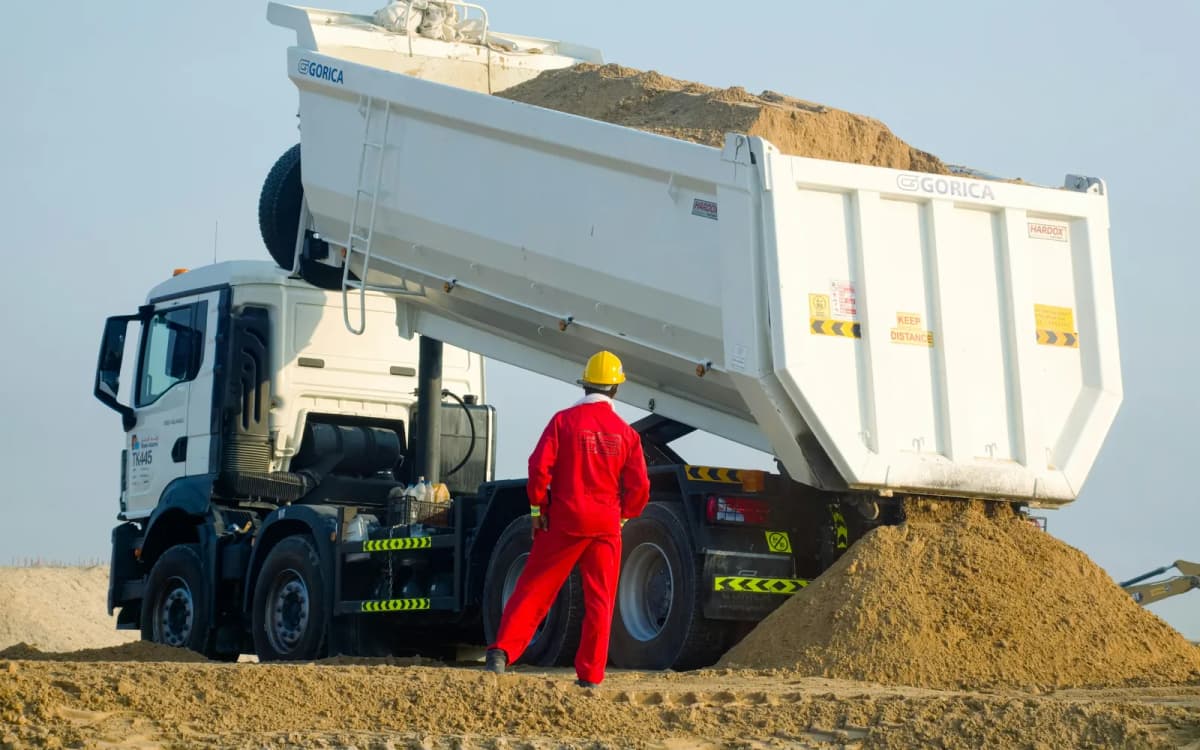
Take an example construction company that wants two used pickups and a dump truck before the spring season, with existing equipment payments of $4,500 a month. If the three new payments add another $4,000, the funder is weighing $8,500 a month against the company's average deposits, including a slow winter. Buying one or two vehicles now and the rest once the first jobs pay can make the request easier to place, and a fleet financing request for a construction company goes better with a list of the jobs the trucks are for. Our construction financing guide covers draws, retainage and the rest of a contractor's cash cycle, and our home services financing guide covers adding vans and technicians before the busy season.
A paid-off truck with a clean title is value a funder can count. We look at the whole fleet with you before the file goes out, so the request reaches funders that handle multi-unit commercial truck financing.
When revenue-based financing fits instead
Equipment financing is built around one vehicle and one invoice, which does not fit every vehicle cost. Revenue-based financing is a merchant cash advance, where a funder buys a share of the business's future sales and pays for them up front. It is sized on your usual revenue, decided mainly on four months of business bank statements, and repaid with a set daily or weekly payment. Amounts run from $5,000 to $2,000,000, and most businesses are funded within one to two business days of choosing an offer. It usually needs no collateral.
It tends to fit three vehicle situations. The first is a down payment, when a funder approves a truck with 20% down and the business would rather keep its cash for payroll. The second is a repair, such as an engine, a transmission or a refrigeration unit on a box truck, where there is no new vehicle to finance and every day off the road costs work. The third is an urgent purchase, such as an older truck from a private seller that falls outside a funder's age limits.
The cost is stated as a factor rate. For example, a $25,000 advance at a factor rate of 1.30 has a total payback of $32,500, collected as $1,250 a week over 26 weeks. When an advance is paired with a vehicle loan, both payments come out of the same deposits, so we size them together and show you the combined total before you sign.
How to apply for business vehicle financing
- Pick the vehicle and get a buyer's order or bill of sale with the price, VIN, mileage and any upfit listed. For a fleet, list every unit.
- Fill in our short application and add four months of business bank statements, either uploaded or through a read-only bank connection.
- We send the file to funders that finance that kind of vehicle and go through the offers with you side by side, including the term, payment, down payment and any guarantee.
- Once you sign, the funder pays the dealer or seller, the lien goes on the title, and you take delivery.
There is nothing to pay to apply or to see offers, and no obligation to accept one. To talk through a quote first, call us at (818) 351-0225.
Business vehicle loan questions
Is it hard to get a business vehicle loan?
A business vehicle loan is usually easier to get than unsecured business credit, because the van or truck secures the deal, but it still depends on time in business, the owner's credit, the business's bank deposits, the vehicle's age and mileage, and a clean title. A newer business, a lower score or an older high-mileage vehicle usually means a larger down payment, a shorter term or a higher cost rather than a flat no.
Can an LLC get a vehicle loan?
Yes, an LLC can finance a vehicle with the LLC on the title and the funder as lienholder, and lenders usually ask for the operating agreement, business bank statements and proof of commercial auto insurance. Because most small LLCs do not have a long credit history of their own, lenders commonly ask the owners to sign a personal guarantee as well, and the Federal Reserve's 2026 Report on Employer Firms found that 59% of small employer firms with debt had used one.
Can I get a car loan with my EIN number?
You can apply for a vehicle loan in the business's name using its EIN, the federal tax ID number the IRS issues to businesses, but very few lenders will approve one on the EIN alone. Most check the owner's personal credit and ask for a personal guarantee, and in NerdWallet's review of business auto lenders only one lender explicitly offered financing in the business's name only, and only to qualified borrowers. Loans without a guarantee tend to go to businesses with a longer history and established business credit.
Can I write off 100% of my vehicle purchase for my business?
You may be able to deduct all or most of it in the first year, but that depends on the vehicle's weight rating, its type and how much it is used for business. Under IRS Publication 946, a car, truck or van rated 6,000 pounds or less has a capped first-year deduction, an SUV rated over 6,000 pounds has a capped Section 179 deduction, and work trucks such as dump trucks and modified cargo vans are treated more like other equipment, and any vehicle must be used more than 50% for business to qualify. Confirm the deduction for your situation with a tax professional before you buy.
What credit score do you need for a commercial vehicle loan?
There is no single minimum, because every funder sets its own. Among the business auto lenders NerdWallet reviews, published minimum credit scores run from 550 to 700, and a lower score usually narrows the options and raises the cost. A larger down payment or a newer vehicle can make up some of the difference.