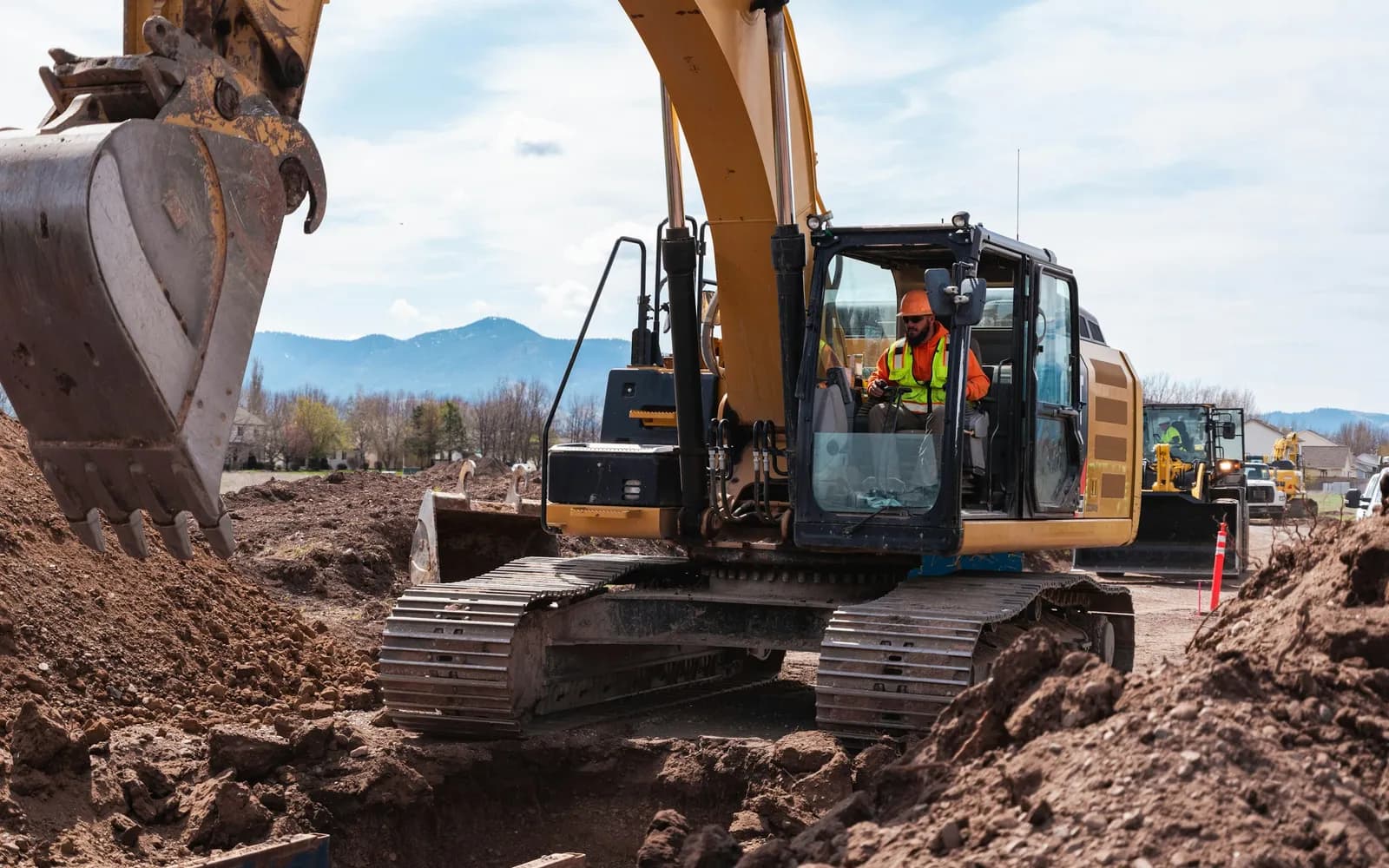
Construction equipment financing pays for an excavator, skid steer, loader, dump truck, trailer or service truck, and the machine itself secures the deal. A funder pays the dealer, auction or seller, records its claim on the equipment, and the business repays a set amount over a term that fits the machine's working life. Equipment financing offers through us typically come back within one to two business days, whether the request is one used trailer or several machines bought as a fleet.
Our guide to how equipment financing works covers loans against leases and what a longer term costs, and our construction financing guide covers draws, retainage and the rest of a contractor's cash cycle.
How construction equipment financing works for each machine
Heavy equipment financing follows the same steps for most machines. You get a quote, invoice or bill of sale showing the make, model, year, serial number and price, and for used equipment the hours on the meter. NerdWallet's guide to construction and heavy equipment financing describes these loans as usually structured as term loans, with the machinery as collateral and payments generally made monthly.
Where the funder records its claim depends on whether the machine carries a state title. Under Section 9-311 of the Uniform Commercial Code, a lien on property covered by a certificate-of-title law, such as trucks and trailers, is recorded on the title, while other equipment is covered by a financing statement, the UCC-1 filing explained in our guide to UCC liens.
| Equipment | Where the lien is recorded | What the funder usually asks for |
|---|---|---|
| Excavators and mini excavators | UCC-1 filing, since off-road machines usually have no title | Serial number, year, hours, attachments and the seller's invoice |
| Skid steers and compact track loaders | UCC-1 filing | Serial number, hours and any buckets, forks or mulchers included in the price |
| Wheel loaders and backhoes | UCC-1 filing | Serial number, hours, condition report or photos for used units |
| Dump trucks | Lien noted on the state title | VIN, mileage, body and hoist details, and the title or the seller's payoff letter |
| Equipment trailers | Lien noted on the title where the state titles trailers | VIN, rated capacity and the bill of sale |
| Service trucks | Lien noted on the state title | VIN, mileage, and the crane, compressor or body on the upfitter's invoice |
Attachments and upfits can usually be financed with the machine when they are on the same invoice, and our equipment financing page lists what else can be financed.
New, used and auction equipment
A new machine from a dealer gets the longest terms and the simplest file, because its value is known and the dealer's invoice answers most of the funder's questions. A used machine costs less up front, and a dealer sale still comes with a clean invoice. A private sale adds a lien search on the seller, because the funder wants to know the machine is not already pledged to someone else's lender.
Age and hours set the term on used equipment. NerdWallet reports that repayment terms on construction and heavy equipment loans typically run 12 to 84 months and that lenders generally will not lend past the equipment's projected useful life. A five-year-old excavator with low hours can still get a long term, while an older loader with heavy hours will usually get a shorter one and may need more money down.
Auctions move faster than financing does, so arrange the money before you bid. The federal government's general terms for selling surplus property, Standard Form 114C, sell everything "as is" and "where is," require full payment within the time stated in the sale before anything is released, and let the government keep 20% of the price (or $25, whichever is greater) as damages from a winning bidder who fails to pay or remove the property in time. Private auction houses set their own terms, so read them before you register. Before bidding, tell the funder the most you plan to pay, including any buyer's premium and transport, and ask what they need from the auction (usually the invoice, serial number or VIN, and photos) to fund on the auction's schedule.
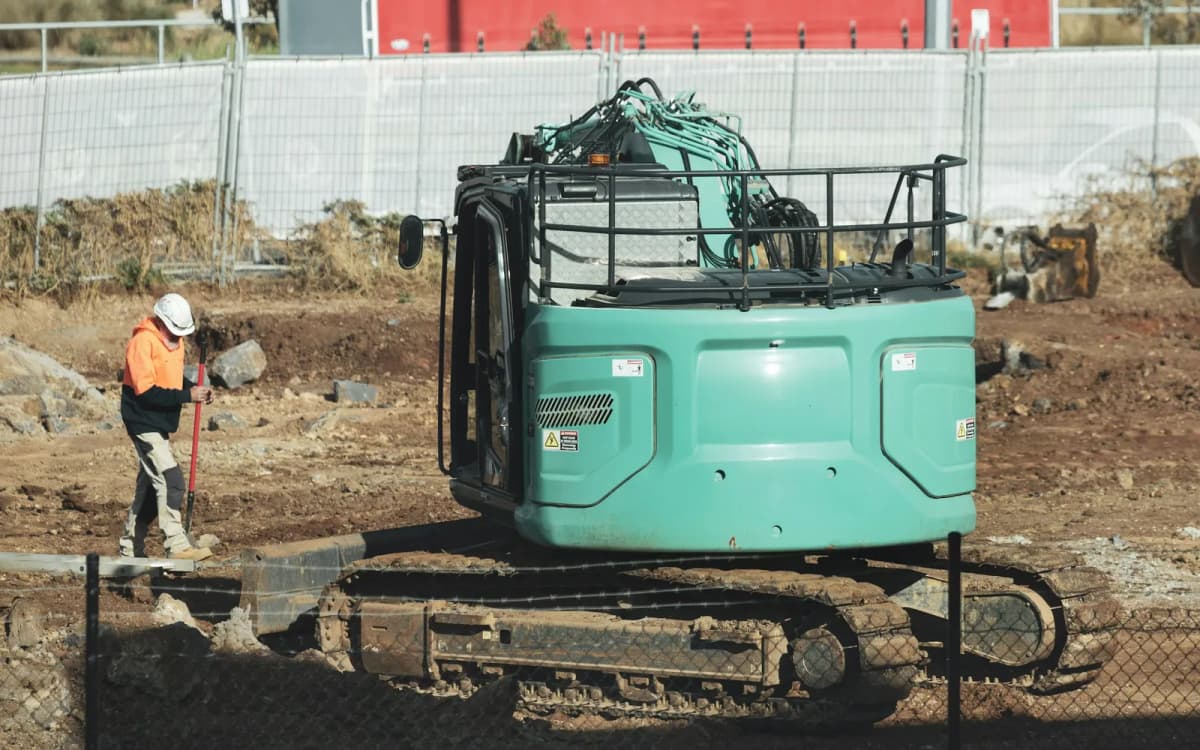
Fleet financing for a construction company
Fleet financing pays for several machines or trucks together, and it comes in two forms. One is a master agreement with a separate schedule for each unit, so every machine has its own price, term and payment under one set of contract terms, and new schedules can be added later. The other is a set of separate deals, sometimes with different funders, each one standing alone. Either way, the funder adds every new payment to the equipment payments already on your bank statements and compares the total with your deposits.
A master agreement saves paperwork and keeps one relationship, but read two clauses before you sign. A cross-default clause can treat a missed payment on one schedule as a default on all of them, and a cross-collateral clause can keep a lien on a paid-off machine until every schedule is paid. Separate deals keep each machine on its own. Also check whether each UCC-1 filing lists the financed units by serial number or describes all of your equipment, because a broad filing can make the next funder hesitate.
Staggering the terms keeps the monthly total under control as the fleet grows. Here is an example site-work contractor adding four used units, each at an example interest rate of 9%.
| Unit (example) | Price | Down payment | Financed | Term | Monthly payment |
|---|---|---|---|---|---|
| Used mini excavator | $68,000 | $6,800 | $61,200 | 48 months | $1,523 |
| Used skid steer | $45,000 | $4,500 | $40,500 | 36 months | $1,288 |
| Used dump truck | $95,000 | $14,250 | $80,750 | 60 months | $1,676 |
| Equipment trailer | $18,000 | $1,800 | $16,200 | 36 months | $515 |
| Total | $226,000 | $27,350 | $198,650 | $5,002 |
For the first 36 months the four payments total about $5,002 a month. When the skid steer and trailer are paid off, the total drops to about $3,199, and after month 48 only the dump truck's $1,676 remains. That step down is room for the next machine without raising what the business already pays each month. Buying the excavator and trailer before the season and the dump truck once the first jobs pay also gives the funder two smaller requests instead of one large one.
A paid-off machine is value a funder can count, and our business vehicle loans guide covers pickups, vans and the title steps for road vehicles.
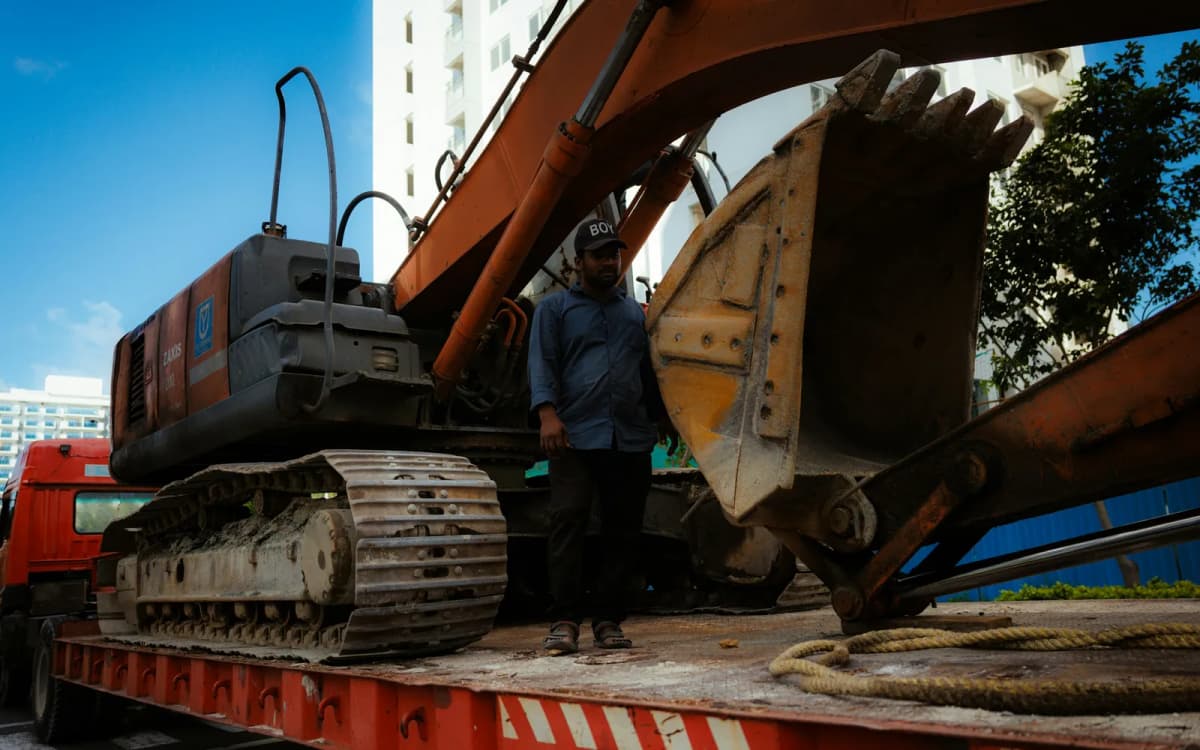
What lenders check for heavy equipment loans
Funders weigh the machine and the business together, and every funder sets its own thresholds.
- Time in business shows a record of deposits, and the funders we work with generally look for about a year in business and about $20,000 a month in deposits. If you're not there yet, apply anyway. Some funders work with newer or smaller businesses, and we'll tell you what's realistic.
- Credit is read on the owner as well as the business. NerdWallet reports that some heavy equipment lenders accept scores as low as 575 while others want 690 or higher, and a lower score usually narrows the options and raises the cost rather than ending the search.
- The down payment depends on the funder, the machine and the file. NerdWallet notes that some lenders finance up to 100% of the equipment's value, and a funder may ask for more down on an older machine or a thinner file.
- Equipment age and hours decide how long the funder will lend, since a machine with fewer hours left in it gets a shorter term.
- Contracts on hand show where the machine will work. Signed contracts, a backlog list or a bid you have won tell the funder the new excavator has jobs waiting, which matters most for a large request or a younger business.
- Bank statements show deposits, balances and the payments already going out, which is how the funder judges whether one more payment fits.
Getting matched does not need a hard credit pull. Most funders prequalify from bank statements and a soft pull, and if a funder runs a hard pull in final underwriting, you will know first. Our construction industry page shows how we work with builders, site-work crews and trades.
Seasonal work and a set monthly payment
An equipment payment is the same in January as in July, while a contractor's deposits are not. Take the example fleet above with its $5,002 monthly total. If the business deposits $110,000 in July and $40,000 in January, the payments take about 4.5% of July's deposits and about 12.5% of January's. Funders look closely at the slow months, so send signed spring work along with statements that show the winter dip.
NerdWallet notes that while payments are generally monthly, some equipment lenders offer quarterly, semiannual or seasonal schedules, so ask for one if your winters are long. A larger down payment lowers every month that follows. A longer term within the machine's working life lowers the payment and raises the total paid, which our equipment financing guide works through with numbers.
Revenue-based financing for down payments, repairs and mobilization
Equipment financing is built around one machine and one invoice, and some equipment costs do not fit that shape. Revenue-based financing is a merchant cash advance, where a funder buys a share of the business's future sales and pays for them in advance. It is sized on the business's usual revenue, repaid with a set daily or weekly payment, and decided mainly on four months of business bank statements. Amounts run from $5,000 to $2,000,000, and most applicants are funded within one to two business days of choosing an offer.
In construction it tends to fit three needs.
- A down payment, when an equipment funder approves a machine with money down and the business would rather keep its cash for payroll and materials.
- A repair, such as a failed hydraulic pump, a final drive or a dump body, where the machine already belongs to the business and every idle day still costs a crew's wages.
- Mobilization, the cost of moving machines and crews to a new site and setting up before the first progress payment, including hauling, fuel, permits and temporary facilities.
Repairs are a common reason to apply. In the Federal Reserve Banks' 2025 Report on Employer Firms, 27% of employer firms that applied for financing did so to make repairs or replace capital assets.
The cost of an advance is stated as a factor rate. For example, a $30,000 advance at a factor rate of 1.32 has a total payback of $39,600, collected as $1,320 a week over 30 weeks. When an advance runs alongside equipment payments, funders read both together, and we show you the combined figures before anything is signed.
Section 179 for construction equipment
Section 179 of the tax code lets a business deduct the cost of qualifying equipment in the year it is placed in service rather than depreciating it over several years. IRS Publication 946 caps the deduction at $2,500,000 for tax years beginning in 2025, reduces that cap dollar for dollar once qualifying purchases pass $4,000,000, and lists $2,560,000 and $4,090,000 for tax years beginning in 2026. It also says businesses must take a 100% special depreciation allowance on qualified property, new or certain used, acquired and placed in service after January 19, 2025, unless they elect out.
The publication has three rules that affect contractors. Property is placed in service when it is ready and available for its specific use, and the publication's own example is a building contractor whose truck needed lifting equipment installed, so the truck counted as placed in service on the January day the modified truck was delivered, not when it was bought the year before. A machine bought from a related person, such as a parent, child or spouse, does not qualify for Section 179. And the equipment has to be used more than 50% for business in the year it is placed in service.
Trucks have extra weight-rating rules, which our business vehicle loans guide lays out. This is general information, not tax advice, so confirm how any purchase will be treated with a tax professional.
How to apply for construction equipment financing
- Get a written quote, invoice or auction listing for each machine, showing the make, model, year, serial number or VIN, hours or mileage, attachments and price.
- List the equipment the company already owns and what it still owes on each piece, along with any signed contracts or backlog that the new machines will work on.
- Start the application, which is one short form plus your last four months of business bank statements, uploaded or connected read-only from your bank.
- We send the file to the funders in our network that finance construction equipment, and offers typically come back within one to two business days. We go through them with you side by side, including the term, payment, down payment and any guarantee or cross-default terms.
- When you sign the offer you choose, the funder pays the seller or auction, the lien is recorded on the title or by UCC-1 filing, and you take delivery.
There is nothing to pay to apply or to see offers, and no obligation to accept one. If you are weighing one machine now against several later, call us at (818) 351-0225 with the quotes in hand, or read more about how we fund contractors on our construction page.
Construction equipment financing questions
How hard is it to get equipment financing?
It is often easier than other business credit, because the machine secures the deal, and in the Federal Reserve Banks' 2025 Report on Employer Firms 68% of firms that applied for an auto or equipment loan were fully approved, the highest share among the products the survey lists, though the result still depends on time in business, credit, deposits and the machine's age and hours.
What is fleet financing and how does it work?
Fleet financing pays for several machines or vehicles together, either under one master agreement with a separate schedule, term and payment for each unit or as separate deals, and the funder adds the new payments to the equipment payments already on your bank statements and compares the total with your deposits before making an offer.
How many years can you finance an excavator?
Terms on construction and heavy equipment loans typically run from 12 to 84 months according to NerdWallet, and lenders generally will not lend past the machine's projected useful life, so a new or low-hour excavator gets a longer term than an older one with heavy hours.
What credit score is needed to buy a mini excavator?
There is no single minimum, since NerdWallet reports that some heavy equipment lenders accept scores as low as 575 while others want 690 or higher, and a lower score usually means fewer options, a higher rate or more money down rather than no offer at all.
What is the monthly payment on a $50,000 business loan?
It depends on the rate and term, but as an example, $50,000 of equipment financing at an example interest rate of 9% comes to about $1,590 a month over 36 months, $1,244 over 48 months or $1,038 over 60 months, and the longer term costs more in total even though each payment is smaller.
