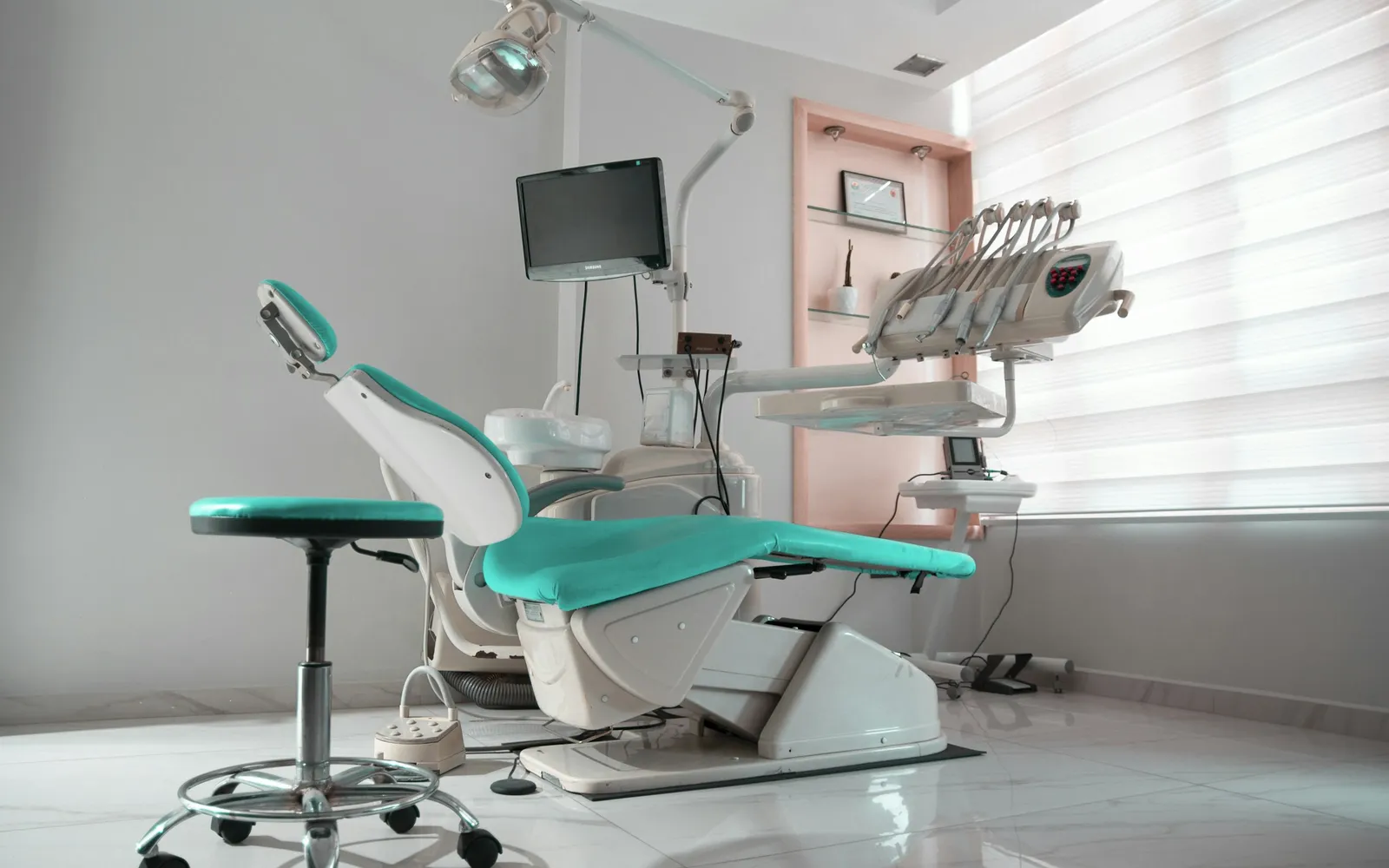
Dental practice financing for an owner usually comes down to four products. Equipment financing pays for chairs, imaging and sterilization gear, with the equipment as security. A line of credit covers payroll and supplies while insurance claims are outstanding. Long-term loans pay for a buildout, a second location, buying a practice or buying out a partner. Revenue-based financing covers short, urgent costs and is repaid from the practice's deposits. This guide is about financing the practice itself, not payment plans for patients. Our guide to medical and dental practice financing explains how reimbursement timing works across specialties, so this one stays on what is specific to a dental office.
What dental practice financing pays for
Most of the money a dental office borrows goes into the operatory. A chair, delivery unit, light and stools are the core of each room, and every room also needs plumbing, compressed air and vacuum lines run to it, cabinetry, and an intraoral sensor with a computer. Imaging is the next large cost. A cone beam CT (CBCT) unit lets a practice plan implants and endodontic work in house instead of referring patients out, and an intraoral scanner replaces impression trays for crowns and aligners. Sterilization grows with the schedule, because more rooms mean more instruments through the autoclaves each day.
The larger projects are the buildout of a new or expanded space, a second location, and changes of ownership, such as buying a retiring dentist's practice or buying out a partner. These earn for many years, so they suit longer terms than a single piece of equipment.
Here is an example of what a second operatory might cost in a practice that already has the space. These are illustrative figures, not quotes.
| Item | Example cost |
|---|---|
| Chair, delivery unit, operatory light and stools | $46,000 |
| Cabinetry, plus plumbing, air and vacuum lines to the room | $26,000 |
| Intraoral sensor, monitor and computer | $12,000 |
| A second autoclave for the added instrument load | $10,000 |
| Total | $94,000 |
Financed over 60 months at an example rate of 9%, $94,000 comes to about $1,951 a month and $117,077 in total. Over 84 months the payment drops to about $1,512, and the total rises to $127,039. The longer term leaves more room in the monthly budget while the new chair fills up, and the shorter one costs less in total.
Dental equipment financing for chairs, imaging and sterilization
Dental equipment financing pays for a specific piece of equipment and uses that equipment as the security. Through our network it goes up to $500,000, offers typically come back within one to two business days, and terms commonly run two to seven years. New and used equipment both qualify. You get a quote from the dealer or seller, the funder pays the vendor, and your fixed monthly payment starts once the equipment is delivered. The equipment financing page lists what it covers.
Match the term to how long the equipment will stay in service. A chair that will be in use for many years can carry a longer term than a scanner or computer you expect to replace sooner. If the payment runs past the equipment's useful life, you will still be paying for it after it has been replaced. Our post on how equipment financing works compares loans with leases, $1 buyouts with fair market value leases, and the Section 179 deduction, so those choices are not repeated here.
Dental quotes tend to include more than hardware. A CBCT or chair quote may list installation, room preparation and training, and an intraoral scanner may come with a software subscription. Ask the funder which of those lines it will finance, and ask the dealer which recurring fees continue after the equipment is paid off, so the monthly cost you plan around is the real one.
Buildouts and a second location
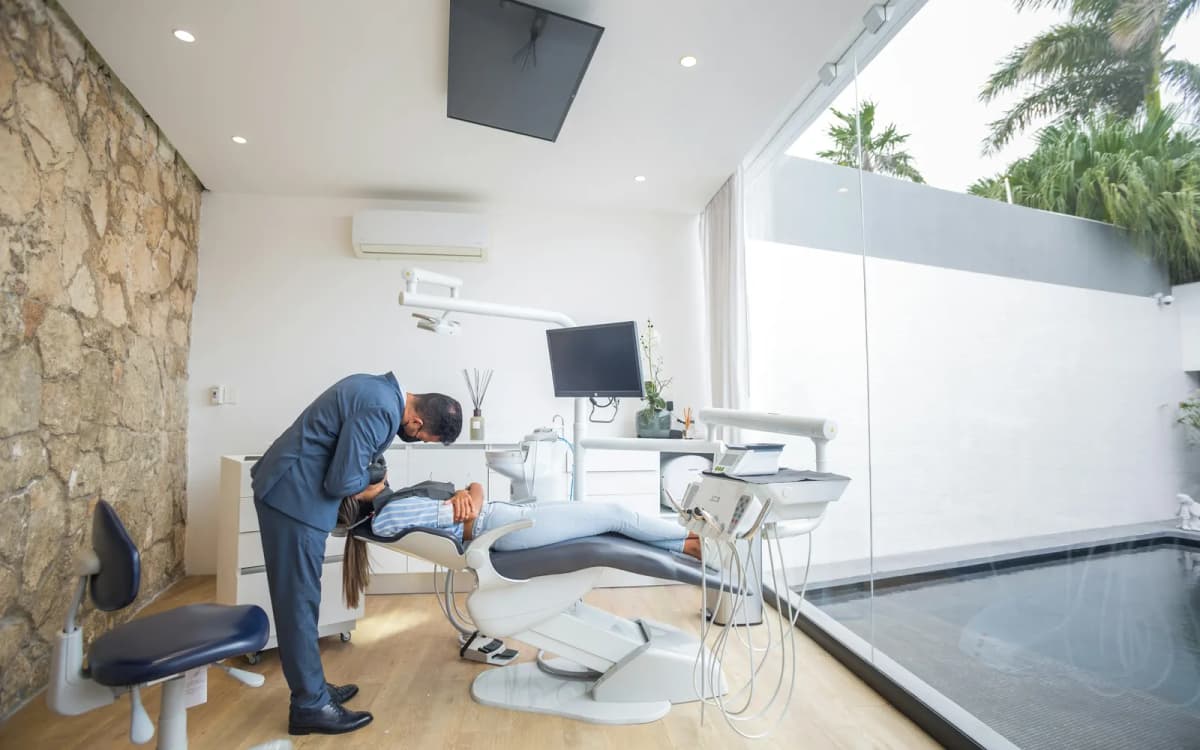
A buildout or a second office is too large and too long-lived for short-term money, so dental office financing for these projects usually means a long-term loan. Through our partners we arrange SBA-equivalent loans for projects like these. They are long-term loans with monthly payments, the partner sets the terms, and because they sit outside the SBA program they can also pay off existing advances. They take weeks rather than days, and the partner will ask for tax returns, a personal financial statement and a schedule of current debts. Our SBA-equivalent and bank loans page lists what to prepare.
For comparison, the SBA's own rules for its 7(a) program show how a buildout is usually structured. According to the SBA's 7(a) terms and conditions, a 7(a) loan runs ten years or less unless it finances real estate or equipment with a useful life over ten years, and a loan for equipment or leasehold improvements can add up to 12 months to finish the installation or the buildout. We do not place SBA loans, so treat these rules as background for comparing offers.
A second location also brings a licensing step that should be on the calendar before opening day. Under DEA rules, a separate registration is required for each principal place of practice where controlled substances are dispensed, so a dentist who prescribes or dispenses at the new office needs a registration for that address.
Dental practice acquisition loans and partner buyouts
Ownership in dentistry is changing hands. An ADA Health Policy Institute brief from June 2025 found that 73% of dentists were practice owners in 2023, down from 85% in 2005, and that newer dentists become owners later in their careers than earlier generations did. That leaves a steady supply of practices for sale by retiring owners and a steady stream of associates looking to buy in.
Dental practice loans for buying a practice, buying into one or buying out a partner are usually long-term loans paid monthly, and we arrange SBA-equivalent loans through our partners for these purchases as well. For background, the SBA lists changes of ownership, complete or partial, among the uses of a 7(a) loan, with a maximum of $5 million. Its terms page calls for a contribution from the borrower of at least 10% of the total project cost. Our guide to business acquisition loans covers the rest of the SBA rules for a purchase, including how a seller note can count toward the down payment, who has to sign a personal guarantee and how a partner buyout is treated.
A dental purchase has a few checks of its own. Lenders and buyers look at collections rather than production, because production is what the practice billed and collections are what it took in after insurance write-offs. They look at how many active patients the practice has seen recently, how much of its revenue comes from each insurance carrier, and how old the chairs and imaging are. A buyer should also plan for the DEA side of the sale. Under 21 CFR 1301.52, a DEA registration cannot be transferred without the agency's written consent, and a seller who is transferring controlled substances to a buyer has to notify the DEA at least 14 days before the transfer.
Insurance reimbursement and a dental office's cash flow
A dental office collects more at the front desk than most medical offices, but it still waits on insurers for over half of its income. In the ADA's Survey of Dental Practice tables for 2024, owner general dentists received 52.8% of their gross billings from private insurance carriers such as dental PPOs and DHMOs, 8.9% from government programs and 36.8% directly from patients. Specialists were closer to an even split, with 45.1% from patients and 41% from private carriers.
Each payer runs on its own clock. For Medicaid, federal rules require the state agency to pay 90% of clean claims from practitioners within 30 days of receipt and 99% within 90 days. Private dental carriers pay on the schedules in their provider contracts and state law, and a claim that comes back for X-rays, narratives or a missing tooth number starts the wait over. The chairs, the staff and the supply orders are paid on time either way.
Take an example practice that collects $90,000 a month, about half of it from insurers, which works out to roughly $10,400 a week in claim payments. If a large carrier's payments slip by two weeks, the practice is about $20,800 short for that stretch even though nothing about its patients or its production has changed. These figures are illustrative. A gap like this is owed money arriving late, and that is the situation a line of credit is built for.
Lines of credit and revenue-based financing for dental offices
A dental line of credit gives the practice a limit, up to $2,000,000 through our network, and you draw only what you need. Offers often come back within a day. You repay what you drew on a weekly or monthly schedule, and the room on the line opens again as you repay. A practice can draw for payroll while a carrier's batch is late and pay the line down when the claims settle. The line of credit page lists what it takes to apply.
Revenue-based financing is a merchant cash advance. A funder buys part of the practice's future sales at a discount, pays a lump sum now, and is repaid with a set daily or weekly payment. The amount is sized on the practice's usual revenue, which for a dental office includes insurer deposits and patients' card payments alike. Advances arranged through us run from $5,000 to $2,000,000, are decided mainly on four months of business bank statements, usually need no collateral and are typically funded within one to two business days of choosing an offer. Cost is stated as a factor rate. As an example, a $40,000 advance at a factor rate of 1.28 means $51,200 paid back in total, which could be $1,600 a week for 32 weeks.
For a practice with steady deposits, an advance fits a cost that cannot wait for a bank, such as a failed vacuum pump or compressor that has stopped the schedule, or a CBCT down payment due this week. The revenue-based financing page covers amounts and timing.
What lenders look at in a dental practice
Every funder sets its own requirements, and they vary widely. Most of them read the same handful of things in a dental file.
- Collections come first. Revenue-based funders and lines of credit read monthly deposits on your business bank statements, and long-term lenders read collections on your tax returns and practice reports.
- Profit on paper can look thin in a dental practice. In the same ADA survey, practice expenses including shareholder salaries averaged 96.1% of gross billings collected for incorporated owner general dentists, because the owner's pay runs through the books, so long-term lenders look at what the owner dentist takes home as well as the profit line.
- Payer mix shows how much of the revenue waits on claims and whether one carrier or Medicaid makes up a large share of it.
- Time in practice and time as owner both count. The funders we work with generally look for about a year in business and about $20,000 a month in deposits. If you are not there yet, apply anyway, because some funders work with newer or smaller practices and we will tell you what is realistic.
- Credit matters more to some funders than others. Getting matched does not need a hard credit pull, since most funders prequalify from bank statements and a soft pull, and a low score narrows the list of funders rather than ending the search.
Existing equipment payments, leases and advances also show on the bank statements, and they shape how large a new payment can be. Our medical and dental practice funding page has a short overview of how we place practice files.
How to apply for dental practice financing
- Fill out the short application with your monthly revenue, time in business and what the money is for. There is nothing to pay to apply or to see offers, and no obligation to accept one.
- Add your last four months of business bank statements, either by uploading them or by connecting your bank read-only.
- For equipment, include the dealer's quote. For a buildout, a second location or a practice purchase, have tax returns, a personal financial statement, a list of current debts and the purchase agreement or lease ready as well.
- We send your file to the funders in our network that work with dental practices, bring their offers back side by side, and go through the payment, the total cost and the early payoff terms with you before anything is signed.
- Most applicants are funded within one to two business days of choosing an offer, and some the same day. SBA-equivalent and bank loans take several weeks.
Say what the money is for when you apply, because a new operatory, a late insurer and a practice purchase go to different funders. More on how we work with practices is on our medical and dental funding page, and to talk it through first, call us at (818) 351-0225.
Dental practice financing questions
How do you finance buying a dental practice?
Most buyers use a long-term loan with monthly payments, such as an SBA 7(a) loan or an SBA-equivalent loan like the ones we arrange through our partners, plus a down payment from the buyer and sometimes a note from the selling dentist. Expect the process to take several weeks and to need tax returns, a personal financial statement, a debt schedule and the purchase agreement.
How long are dental equipment loans?
Dental equipment financing through our network commonly runs two to seven years, with offers typically within one to two business days. The term should match how long the chair, imaging unit or scanner will stay in service, so the equipment is paid off before it is replaced.
What is a dental line of credit?
A dental line of credit is a limit the practice can draw on as needed, up to $2,000,000 through our network, and repay weekly or monthly on what was drawn. Practices use it to cover payroll and supplies while insurance claims are outstanding, and the room on the line opens again as it is repaid.
Do lenders look at production or collections?
Lenders look at collections, meaning what the practice took in after insurance write-offs, because that is the money available to make payments. Revenue-based funders read collections as deposits on four months of bank statements, and long-term lenders read them on tax returns and practice reports.
Does dental practice financing include patient financing?
No, dental practice financing pays for the practice itself, such as equipment, a buildout, a purchase or working capital. Payment plans that patients use to pay for their own treatment are a separate product offered elsewhere, and we do not arrange them.
