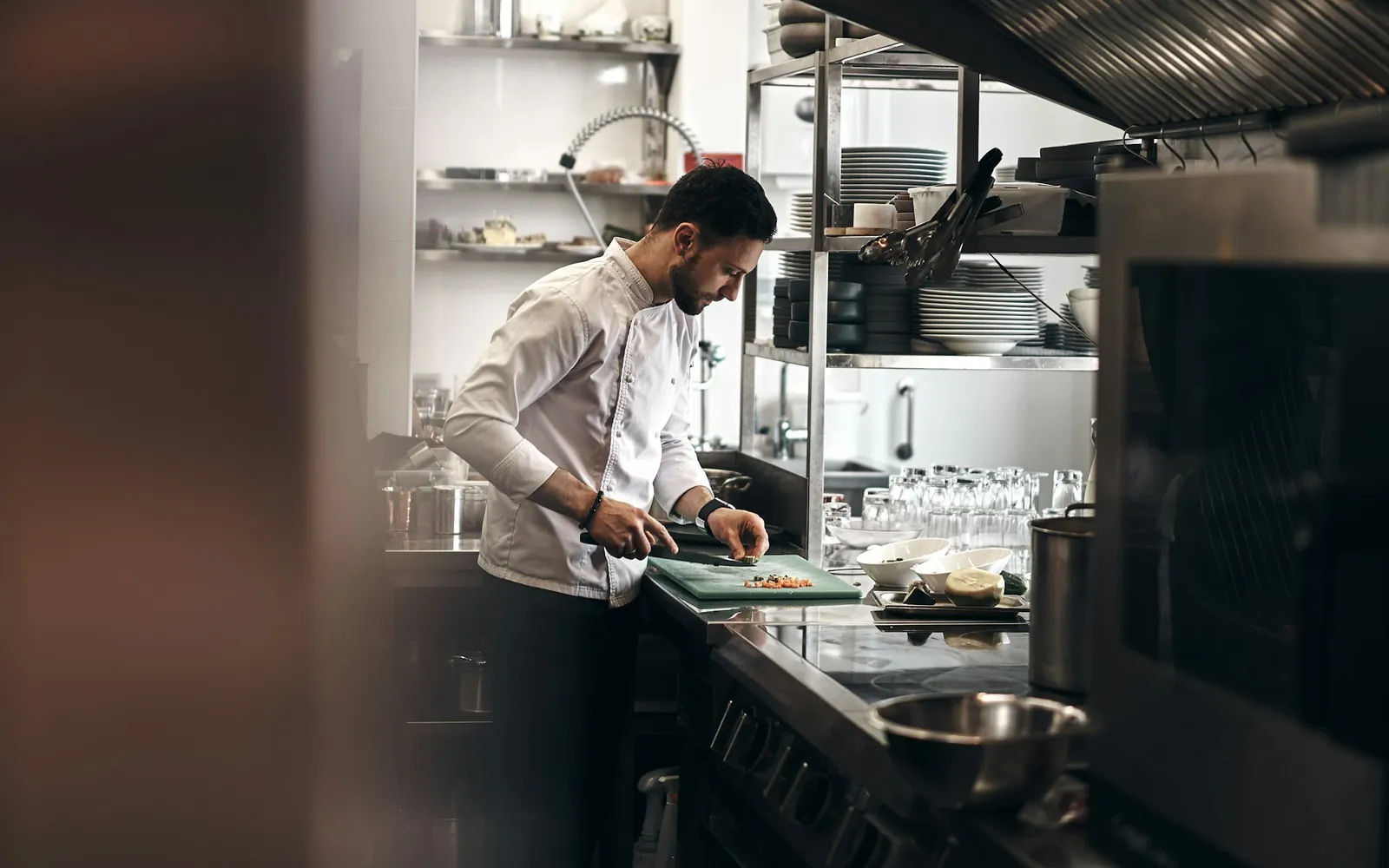
Restaurant equipment financing pays for a specific piece of kitchen or front-of-house equipment, such as a range, an exhaust hood, a walk-in cooler, a dish machine, POS hardware or an espresso machine, and uses that equipment as security for the deal. You send the seller's quote, the financier reads the equipment and your bank statements, and the money goes straight to the seller once you sign. Through our network, equipment financing runs up to $500,000 and offers typically come back in one to two business days. The rest of this guide covers what restaurants, cafes, bakeries and caterers usually finance, new against used, financing against leasing, how the term should match the equipment's life, and a $60,000 kitchen package worked through in dollars.
For the wider picture, our guide to restaurant financing covers every funding type a restaurant uses, and how equipment financing works explains loans, leases and costs in any industry.
What restaurant equipment financing usually pays for
Almost anything with a model number and a seller who will write a quote can be financed. These are the requests we see most.
- The cooking line is the most common request, including ranges, ovens, fryers, griddles, charbroilers, combi ovens and pizza ovens.
- Exhaust hoods are usually financed together with their fire suppression systems and makeup air units.
- Refrigeration covers walk-in coolers and freezers, condensing units, reach-ins, prep tables and ice machines.
- Dish machines range from undercounter units to conveyor machines.
- Front-of-house and bar equipment includes POS terminals, kitchen display screens, printers, espresso machines, grinders and beverage dispensing systems.
- Bakeries finance deck ovens, mixers, proofers and sheeters.
The IRS has its own view of most of this. In the restaurant section of its Cost Segregation Audit Techniques Guide, a matrix written for IRS examiners puts beverage equipment (including refrigerators, coolers and dispensing systems), POS systems, equipment exhaust hoods and the refrigeration units that run walk-in coolers and freezers in asset class 57.0, Distributive Trades and Services, with a 5-year recovery period. The guide says plainly that the directive is not an official statement of law, so treat it as a sign of how these assets are usually classed, not as tax advice.
Some things are harder to finance as equipment. Smallwares such as pans, sheet trays and glassware rarely come on one quote large enough to matter, and a used piece bought from another operator often has no formal invoice at all. Those purchases usually fit a different product, covered further down.
New or used restaurant equipment
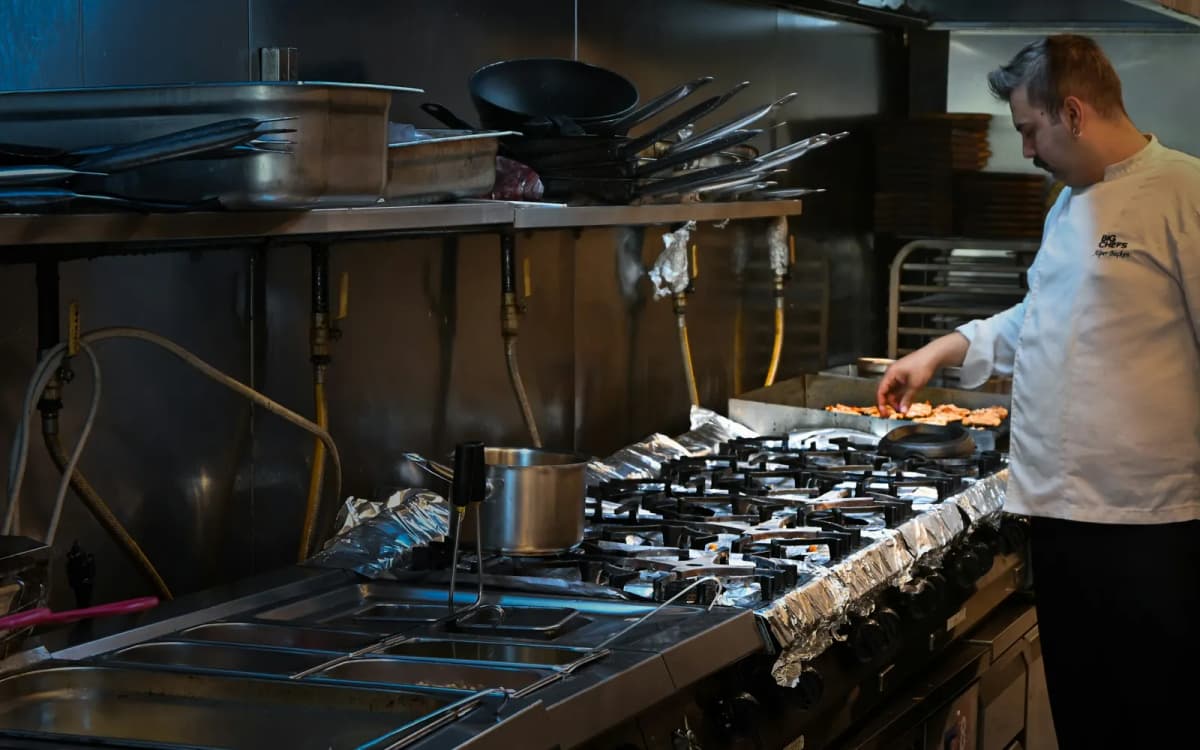
Used equipment can cost far less, and financiers will usually look at it, but the deal changes in three ways. The term tends to be shorter, because a ten-year-old fryer has fewer working years left. The financier wants to know who the seller is, and a dealer that reconditions and warranties its equipment is much easier to work with than a closing restaurant's liquidation sale. A down payment is also more likely. New equipment has its own case on running costs, since ENERGY STAR estimates that a kitchen fitted with a full suite of its certified commercial food service equipment could save an operator about $4,000 a year.
Resale value matters more in a kitchen than owners expect. A range, a mixer or an espresso machine can be unplugged, loaded on a truck and sold, so a financier can recover part of its money if payments stop. A hood is ducted through the roof and a walk-in is assembled in place, so most of what you pay for them is installation that cannot be sold again. That is why financiers put more weight on the restaurant's own deposits for hoods, walk-ins and full buildouts, and why a quote that splits equipment from installation helps the file.
Financing or leasing kitchen equipment
With an equipment loan, the restaurant owns the equipment and the financier holds a claim on it until the last payment. With a lease, the leasing company owns it and you pay to use it, either with a $1 buyout at the end (which works much like a loan) or a fair market value lease, which has lower payments and lets you return the equipment, renew or buy it at market price. Our equipment financing guide walks through both lease types in detail.
In a restaurant the choice usually follows how long the item stays useful. A hood, a walk-in, a dish machine or a deck oven can run for many years, so owning it is usually cheaper in total. POS terminals, kitchen screens and tablets go out of date in a few years, so a short term or a fair market value lease keeps you from paying for hardware you have already replaced. Leasing also changes the tax side, since IRS Publication 946 says you generally cannot depreciate property you lease unless you keep the incidents of ownership.
What an equipment financier looks at
Every financier weighs the equipment and the restaurant differently, but the quote comes first. It should name the seller, the make and model of each piece, whether each is new or used, and separate lines for delivery, installation and tax. The financier compares the price with what the equipment is worth and decides how much of the deal the equipment itself covers. A quote that lumps a hood, ductwork and a roof curb into one number reads as construction, and some financiers will cover less of it.
On the restaurant side, financiers read your last few months of business bank statements for steady deposits, how low the balance runs and what other payments already leave the account. Time in business and credit come next. The funders we work with generally look for about a year in business and about $20,000 a month in deposits. If you are not there yet, apply anyway, because some funders work with newer or smaller businesses and we will tell you what is realistic. Getting matched does not need a hard credit pull, since most funders prequalify from bank statements and a soft pull. A funder may run a hard pull in final underwriting, and you will know before it happens.
Down payments and terms that match the equipment's life
Down payments vary by financier, by equipment and by file. Some offers ask for nothing down, others for the first and last payments, and used equipment or a thin file usually means more down. Putting more down lowers the payment and can turn a borderline file into an offer.
The term should sit inside the equipment's working life, so you are not still paying for a fryer you have already replaced. IRS Publication 946 gives asset class 57.0, which covers assets used in wholesale and retail trade, a 9-year class life and a 5-year recovery period, and its own worked example puts a cash register in that class. That is the same class the IRS examiners' restaurant matrix uses for hoods, walk-in refrigeration, beverage equipment and POS systems. Computers and peripheral equipment have a 5-year recovery period. A 3-year to 5-year term on a range, a hood or a walk-in sits well inside a 9-year class life, while POS hardware fits a shorter term.
A restaurant's sales also move through the year, and an equipment payment stays the same in February as in May. Add the new payment to every set payment you already make, check the total against your slowest month, and choose the term that keeps that month comfortable. Our post on seasonal business loans goes further into timing purchases around the slow season.
A $60,000 kitchen package, worked through
Take an example 70-seat bistro with a coffee bar that brings in about $100,000 in a usual month and about $88,000 in February, its slowest. The owner is replacing an ageing kitchen and adding espresso service. These prices are illustrations, not quotes.
| Equipment (example prices) | Cost |
|---|---|
| Walk-in cooler with condensing unit, installed | $16,000 |
| Exhaust hood with fire suppression, installed | $14,000 |
| High-temperature door-type dish machine | $9,000 |
| Two-group espresso machine and grinder | $8,000 |
| Six-burner range with oven | $5,000 |
| Two fryers | $5,000 |
| POS terminals, printers and a kitchen screen | $3,000 |
| Total | $60,000 |
With an example 10% down payment of $6,000, the owner finances $54,000. At an example interest rate of 11% a year, three terms look like this.
| Example at 11%, $54,000 financed | 36 months | 48 months | 60 months |
|---|---|---|---|
| Monthly payment | $1,767.89 | $1,395.66 | $1,174.09 |
| Total of payments | $63,644 | $66,992 | $70,445 |
| Financing cost | $9,644 | $12,992 | $16,445 |
| Total paid, with the $6,000 down | $69,644 | $72,992 | $76,445 |
Even the 36-month payment is about 2% of February's $88,000, so this bistro could choose the shorter term and save $6,801 against the 60-month version. A restaurant with other set payments already coming out of the account might pick 48 or 60 months instead and accept the higher total in exchange for room in the slow months. Fees, insurance and maintenance come on top in every version, so compare offers by the total of payments and what is due at signing.
Section 179 and other tax rules for kitchen equipment
This section is general information from IRS publications. Ask your tax professional how any of it applies to your restaurant before you sign.
Section 179 lets a business deduct the cost of qualifying equipment in the year it is placed in service instead of depreciating it over several years. According to Publication 946, the property must be acquired by purchase for use in the business, more than 50% business use is required, and the publication treats you as owning property even while you are still making payments on it. The deduction is capped at $2,500,000 for tax years beginning in 2025 and $2,560,000 for 2026, and it cannot exceed the taxable income from your active business, though the unused part carries forward. That income limit matters in a restaurant, where a year of thin margins can leave less room than the purchase price.
Three other rules in the same publication come up in restaurant buildouts. An owner can elect to treat certain improvements to nonresidential buildings as section 179 property, including roofs, HVAC, fire protection and alarm systems and security systems. The special depreciation allowance returned to 100% for qualified property acquired and placed in service after January 19, 2025, and that property can be new or certain used property. And the placed-in-service date is when the equipment is ready and available for its use, which is not necessarily the day it is first used.
Small purchases have their own rule. Under the IRS tangible property regulations, a business without an applicable financial statement can elect a de minimis safe harbor to deduct amounts up to $2,500 per invoice or item. Many smallwares and some countertop units cost less than that per item.
When an advance fits better than an equipment loan
Equipment financing needs a quote, a seller the financier accepts and a day or two for offers. Sometimes the kitchen cannot wait that long, or the purchase does not fit the format.
A walk-in that stops holding temperature on a Friday is the clearest case. Under the FDA's model Food Code, cold-held food that needs temperature control must stay at 41°F or below, so a failed compressor can mean discarded product within hours. The repair, the rental of a refrigerated trailer and the restocking often land on separate invoices from different vendors. The same goes for a used combi oven bought from another operator with no formal invoice, or a group of small items that adds up to more than you want to pay from the account at once.
Revenue-based financing fits those moments. It is a merchant cash advance: the funder buys a set amount of future sales at a discount, sizes the advance on your usual deposits, and collects a set daily or weekly payment until the agreed total is paid. Advances run from $5,000 to $2,000,000 and are typically funded within one to two business days of choosing an offer, without a quote or the equipment as collateral.
For example, a cafe that deposits about $20,500 in a usual week takes a $20,000 advance at an example factor rate of 1.20. The total payback is $24,000, so the cost is $4,000, repaid as 12 set weekly payments of $2,000. The $4,000 is the price of having the money in a day or two, and the cafe owns what it buys from the start.
Both products can sit side by side, with an advance for a failed condensing unit this week and equipment financing for a new walk-in and hood during a planned remodel. Food trucks and trailers are a different file, because the vehicle is part of the collateral, so they have their own guide to food truck financing, and hotel kitchens and bars are covered in hospitality financing.

How to apply for restaurant equipment loans through us
The application is a short form plus your last four months of business bank statements, uploaded as PDFs or emailed to us. For equipment financing, add the seller's quote, with equipment and installation on separate lines. We send the file to the funders in our network that finance restaurant equipment, and offers typically come back within one to two business days. We go through them with you side by side before anything is signed, and there is nothing to pay to apply or to see offers.
Our equipment financing page lists what can be financed, and the restaurant funding page shows how equipment financing sits next to the other products restaurants use. You can also call us at (818) 351-0225 with the quote in hand.
Questions about restaurant equipment financing
Can you finance used restaurant equipment?
Yes, most equipment financiers will consider used restaurant equipment, usually with a shorter term and sometimes a down payment, and a dealer that reconditions and warranties its equipment is easier to finance than a private sale with no invoice.
How long are restaurant equipment loans?
Terms vary by financier and should stay inside the equipment's working life, and a 3-year to 5-year term fits well, since IRS Publication 946 gives asset class 57.0, which an IRS examiners' guide uses for restaurant hoods, refrigeration and POS systems, a 9-year class life and a 5-year recovery period.
Is it better to lease or finance restaurant equipment?
Financing to own usually costs less in total for long-life pieces such as hoods, walk-ins and dish machines, while a short lease suits POS hardware and screens that go out of date in a few years.
What do you need to apply for restaurant equipment financing?
Through Today Capital Group you need a short application, your last four months of business bank statements and the seller's quote, and getting matched with funders does not need a hard credit pull.
Can a new restaurant get equipment financing?
Some financiers will finance equipment for a new restaurant, usually with a larger down payment and more weight on the owner's credit and experience, and we will tell you what is realistic for your file after one application, and our restaurant funding page shows the other options.
