
Veteran business loans are mostly regular business loans with a small veteran benefit attached, because the VA does not make general business loans and most help for veteran owners comes through SBA programs and counseling. The programs that do exist are specific: a $0 upfront fee on SBA Express loans, a disaster loan for a business that loses a key reservist to a call-up, free training and counseling, and a certification that opens federal contracts. Today Capital Group has no special veteran rate or program, and offers through us are decided the same way for everyone, on deposits, time in business and credit. Every product we place is open to veteran owners, from revenue-based financing of $5,000 to $2,000,000 to lines of credit up to $2,000,000 and equipment financing up to $500,000.
The SBA's Office of Advocacy reports that veterans were majority owners of over 1.6 million firms in 2022, employing nearly 3.2 million workers, and that veterans make up 4.3% of U.S. business owners.
Does the VA offer veteran business loans?
The VA backs home loans, and it has no general loan for starting or running a business. Its guide for veteran business owners, Getting started with Veteran-Owned Small Business Support, tells anyone who needs a loan to check eligibility and then go to the SBA or to a bank that makes SBA loans.
The closest VA benefit is the Self-Employment track of Veteran Readiness and Employment (VR&E), for service members and veterans with a service-connected disability and an employment barrier. It covers a business plan, an analysis of the concept, training and guidance, and the VA's page lists no loan.
The $0 SBA fee on Express loans for veteran-owned businesses
The only cost saving tied directly to veteran status on an SBA loan is a fee waiver. Lenders pay the SBA an upfront guaranty fee on 7(a) loans and may pass the cost to the borrower. Under the SBA's fiscal 2027 fee notice, which covers loans approved from October 1, 2026 through September 30, 2027, that fee is $0 on SBA Express loans to businesses owned and controlled by a veteran or a veteran's spouse. SBA Express loans top out at $500,000 with a maximum guaranty of 50%, and the table shows what the waiver is worth at three sizes.
| SBA Express loan | Guaranteed portion at 50% | Standard upfront fee | Veteran-owned business |
|---|---|---|---|
| $100,000 | $50,000 | $1,000 (2%) | $0 |
| $300,000 | $150,000 | $4,500 (3%) | $0 |
| $500,000 | $250,000 | $7,500 (3%) | $0 |
The waiver covers SBA Express only. Standard 7(a) loans with terms over 12 months carry no veteran discount, with fees of 2% to 3.75% of the guaranteed portion. A separate 0% fee on 7(a) loans of $700,000 or less goes to manufacturers, food supply chain businesses and rural businesses, whoever owns them. The SBA publishes these fees every fiscal year, and other labels you may see, such as Veterans Advantage, are not in the notice, so ask the lender to show you the fee under the current one.
The waiver leaves the credit decision where it was. The SBA's rulebook, SOP 50 10, encourages lenders to give veterans special consideration, and it also says a loan must be declined if the business's cash flow does not show reasonable assurance of repayment. Owned and controlled means veterans hold at least 51% and run daily operations, veterans with a dishonorable or bad conduct discharge are excluded, and lenders must document eligibility in the loan file, so expect to show proof.
We do not place SBA loans, so you would not get this waiver through us. The SBA's Lender Match tool finds lenders that make them, and our guide to SBA loan requirements covers what those lenders check.
The Military Reservist Economic Injury Disaster Loan
The Military Reservist Economic Injury Disaster Loan (MREIDL) is for a business short of cash because someone it depends on has been called up, so it applies to serving Reserve and National Guard members and the businesses that employ them. SBA rules define that essential employee as a person, owner or not, whose managerial or technical expertise is critical to daily operations, and the call-up must last more than 30 consecutive days.
- The maximum is $2 million, limited to the economic injury the SBA calculates.
- The fixed rate will not exceed 4%, the term runs up to 30 years, and the first 12 months have no payment and no interest.
- Collateral is required on loans above $50,000.
- You can apply from the notice of expected call-up until one year after release from active duty.
- The money covers ordinary operating expenses, and it cannot replace lost profits, refinance long-term debt or pay for expansion.
- A business that can fund its own recovery or get credit elsewhere is not eligible.
Boots to Business and Veterans Business Outreach Centers
Most of what the SBA runs specifically for veterans is training and counseling. Boots to Business is an entrepreneurship course offered through the Defense Department's Transition Assistance Program. The two-day introductory course is free at participating installations and open to service members, including National Guard and Reserve, and military spouses. Boots to Business Reboot brings the same material to veterans of all eras in their own communities.
Veterans Business Outreach Centers (VBOCs) are run by 31 organizations under agreements with the SBA. They offer workshops, counseling and mentorship, and they help with business plans. A VBOC does not lend, but a counselor can refer you to a lender or an SBA program, which makes it a sensible first call if you are unsure which program applies.
VetCert opens federal contracts and comes with no loan
The SBA's Veteran Small Business Certification program, known as VetCert, certifies veteran-owned small businesses (VOSBs) and service-disabled veteran-owned small businesses (SDVOSBs). A firm has to be small under the size standard for a NAICS code in its SAM profile and at least 51% owned and controlled by one or more veterans, and for SDVOSB status those owners must be rated service-disabled by the VA. SDVOSBs can then compete for set-aside and sole-source contracts across the federal government, which aims to award them at least 5% of its contracting dollars each year, and VOSBs can compete for those contracts at the VA. Certification comes with no loan, grant or lower rate, and the SBA says it charges nothing to apply.
What your DD-214 is used for
The VA decides veteran status for this program, and the SBA's VetCert knowledge base says the SBA cannot. The check starts as an automated match between the address in your application and the residence address in your VA.gov profile, and a mismatch sends the application back. If the VA has to review your records, a DD-214 shows qualifying service when the reason for separation reads "Release from Active Duty," no remarks indicate training status, and the character of discharge is not Other than Honorable, Dishonorable or Bad Conduct. A VA letter granting service connection or a VA Benefits Summary Letter also shows it. Guard or Reserve service of one weekend a month and two weeks a year does not count on its own. These details come from the SBA's help articles, so confirm the current rules with the SBA before you apply.
A certified firm that wins a contract still has to pay for materials and a crew before the first payment comes in, and regular funding can cover that gap.
Can you use a VA home loan for a business?
The VA's eligibility page says the home must be for your own personal occupancy, and its list of uses covers buying, building or improving a home and refinancing a home loan, so it will not buy a business or a commercial building. A VA-backed cash-out refinance lets you take cash from home equity for debt, school, home improvements or other needs, provided you live in the home. The VA's page does not say whether a business counts among those needs, so ask the lender first, and remember the money would then be a debt on your house.
Ads promising guaranteed veteran grants
Be wary of any ad that promises a guaranteed grant for veterans. The FTC's guide to government grant scams says offers of free money from government grants are scams, including grants for home business expenses, and that no agency will demand a fee to get one. Real federal grants require an application and are listed for free at grants.gov, and the SBA says it does not provide grants for starting and expanding a business. Our guide to the easiest business loans to get covers the warning signs.
Small business loans for veterans through us
Today Capital Group has no veteran rate, no veteran discount and no veteran program. One application goes to the funders in our network, and they decide offers the same way for everyone, on deposits, time in business and credit, so your service record does not move an offer up or down. You see the offers side by side, and we go through them with you before anything is signed. Our guide on how to get a business loan covers the steps with any lender.
| Funding | Amount | How fast | How it is repaid |
|---|---|---|---|
| Revenue-based financing | $5,000 to $2,000,000 | Typically funded within one to two business days of choosing an offer | A set daily or weekly payment |
| Line of credit | Up to $2,000,000 | Offers come back in one to two business days | Weekly or monthly, on what you have drawn |
| Equipment financing | Up to $500,000 | Offers typically in one to two business days | Set payments over the equipment's useful life |
| SBA-equivalent and bank loans through partners | Up to $5 million | Weeks | Monthly payments over years |
| Commercial equity loans and lines | Based on equity in commercial property you own | Commonly weeks, because of the appraisal | Monthly, or on what you draw from a line |
Revenue-based financing is a merchant cash advance. The funder buys part of your future sales in advance, sizes the amount on your usual revenue and collects a set daily or weekly payment until the agreed total is paid. The cost is quoted as a factor rate, which comes to a dollar figure you see before signing, and it is the price of speed and of a decision based mainly on four months of bank statements. Our guide to a merchant cash advance for small business shows which businesses it suits.
SBA-equivalent and bank loans come from our partners, with long terms and monthly payments, and the partner sets the terms. They sit outside the SBA program, so the Express fee waiver does not apply, and they can even pay off existing advances. Plan on weeks, along with tax returns, a personal financial statement and a debt schedule.

What a recent separation or a move can change
Neither of the two situations below comes from a government study, so read them as patterns and not as rules.
Thin personal credit after separation
Someone who lived on base and carried few accounts can leave the service with a short credit file. That is a different problem from a bad record, but a lender that relies on credit has less to go on. That matters most for SBA-equivalent and bank loans and less for revenue-based financing, where deposits carry more of the decision. Our guide on how to build business credit covers the vendor accounts that start a business file.
A business opened soon after separation also has a short history. The funders we work with generally look for about a year in business and about $20,000 a month in deposits. If you're not there yet, apply anyway. Some funders work with newer or smaller businesses, and we'll tell you what's realistic.
A move between states
A new bank splits your statement history, so send statements from both banks to cover the four months. If the company was formed again in the new state, its registration date may look younger than the business is, so include the old state's paperwork. If you plan to apply for VetCert, update your VA.gov residence address first, because the SBA's match uses it.
An example: a veteran-owned HVAC company buying a van
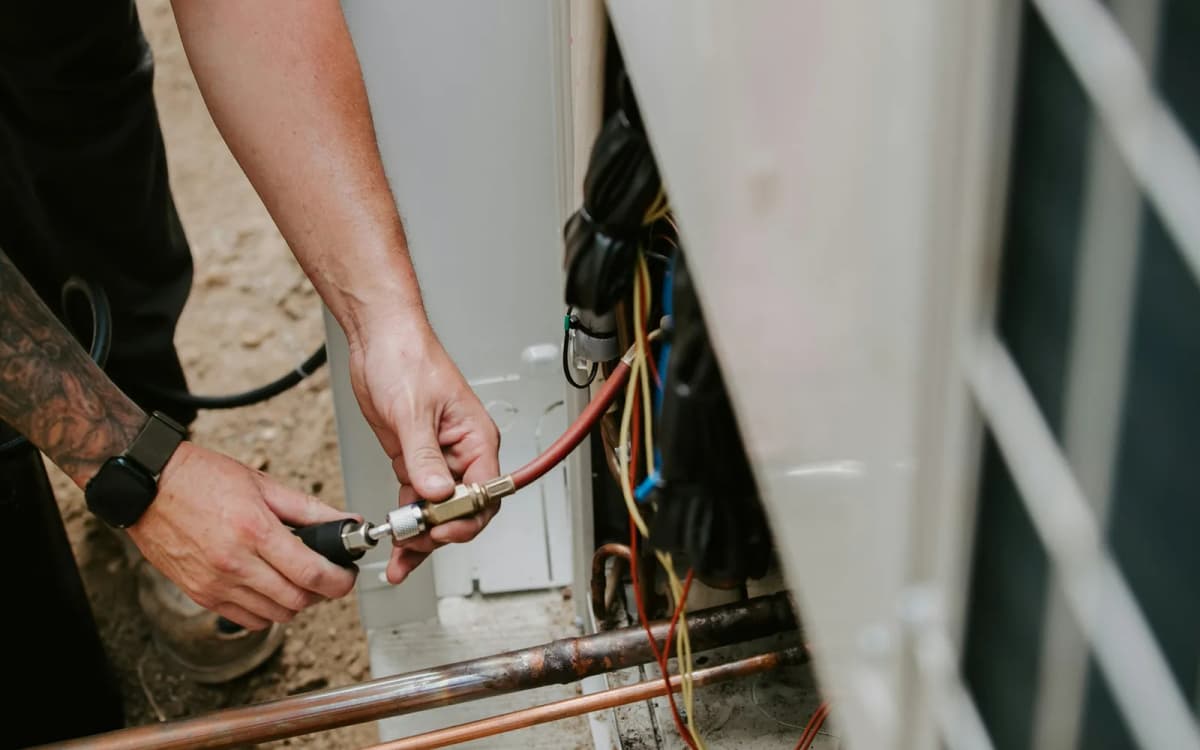
The figures below are an example only, not a quote or the terms of any funder. Say a veteran-owned HVAC company has been open four years, deposits about $70,000 a month and wants a second service van. The van with racks and shelving costs $66,000, the owner puts $6,000 down, and the company needs $60,000.
| Example | Equipment financing | Revenue-based financing |
|---|---|---|
| Example terms | 11% interest over 60 months | 1.28 factor rate, 40 weekly payments |
| Payment | $1,304.55 a month | $1,920 a week |
| Total paid | $78,273 | $76,800 |
| Cost in dollars | $18,273 | $16,800 |
| Paid off in | 5 years | About 9 months |
A van works for years, so the equipment loan matches how it earns its keep, with a payment of about 2% of monthly deposits. The van secures the deal, and our guide on how equipment financing works covers down payments and terms. The advance costs less in total dollars here because it is paid off in about nine months, and for the same reason its payment works out to about $8,320 a month, or about 12% of deposits. It fits when the van is a private sale a finance company will not write, or when the same money also has to buy tools and parts.
If the same owner took a $60,000 SBA Express loan from a bank, the waiver would save $600, which is 2% of the $30,000 guaranteed portion. That is real money, and it is small next to the interest on a loan of that size, so the rate, the term and the payment should decide which offer you take.
How to apply through us
Start with the short application and four months of business bank statements as PDFs. Getting matched does not need a hard credit pull, since most funders prequalify from bank statements and a soft pull, and a funder that runs a hard pull in final underwriting tells you first. There is nothing to pay to apply or to see offers. To talk through a purchase or a contract first, call (818) 351-0225.
Frequently asked questions
Does the VA give loans to veteran-owned businesses?
The VA does not make general business loans; it backs home loans, and its guide for veteran business owners sends anyone who needs a business loan to the SBA or to a bank that makes SBA loans.
Are there small business loans for veterans with no fees?
The SBA's fiscal 2027 notice sets the upfront guaranty fee at $0 on SBA Express loans to businesses owned and controlled by a veteran or a veteran's spouse, but the loan still carries interest and standard 7(a) loans get no veteran discount.
Do veteran owned business loans require VetCert certification?
VetCert is a certification for federal contracts, and neither the SBA's fee notice nor the funding we place requires it.
Can I use my VA home loan to start a business?
A VA home loan must be for a home you will personally occupy, so it cannot buy a business or a commercial building.
Are there government grants for veterans to start a business?
The SBA says it does not provide grants for starting and expanding a business, the FTC warns that offers of free money from government grants are scams, and real federal grants are listed for free at grants.gov.
